
Ditching the Weekend Reservation: How Low-Stakes Asks Build Honest Community
Making adult friends after moving to Lagos collapses under expensive cross-town plans. A twenty-minute errand by the gate builds the durable comfort newcomers actually need.
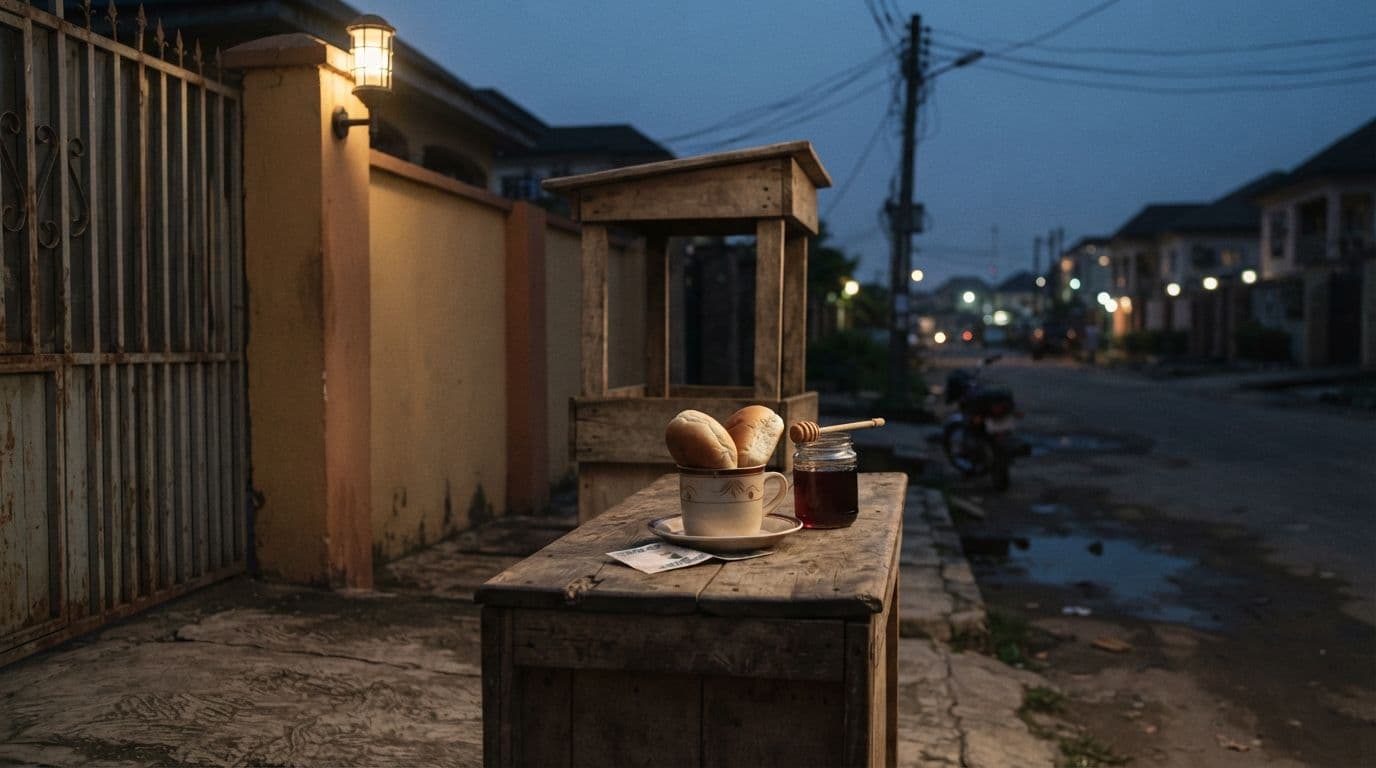
Tunde stood by the security gate of his Gbagada compound on a sticky Tuesday evening, staring at his phone with the specific exhaustion of someone who had relocated to the city four months prior. His group chats from Ibadan were fading into intermittent birthday emojis, while his new office colleagues in Victoria Island operated like synchronized commuters: hyper-cordial from nine to five, vanished by five-fifteen into the crawl of Ozumba Mbadiwe.
He had tried the textbook advice for making adult friends after moving to Lagos. Two weekends earlier, he had attempted to organise a brunch at a popular rooftop spot in Lekki Phase 1. Six people expressed interest. By Saturday afternoon, two were trapped in sudden third-mainland bridge traffic, one had a generator breakdown that required an emergency electrician, and the remaining two arrived ninety minutes late, visibly anxious about the ₦38,000 cocktails and the looming ride-hail surge pricing home.
The gathering had felt less like bonding and more like an endurance trial. Nobody relaxed; everyone performed.
"You are doing too much," his neighbour, Femi, remarked, leaning over the low balcony railing with a plastic cup of water. Femi was a freelance illustrator who had lived in the building for three years and treated social invitations with the caution of a man who knew the city's logistical appetite. "You cannot invite Lagos people to an event that requires their full Sunday budget, three hours of transit, and their best ironed shirt. That is not an invitation; that is a project."
"If you don't plan a proper dinner, how do you actually get to know people?" Tunde asked. "We work remotely three days a week. If I don't set a real venue, I just talk to delivery drivers."
Femi shook his head. "Walk down to the junction at Diya Street around eight. The suya spot beside the pharmacy is setting up. Tell someone to meet you there for twenty minutes. If the vibe is terrible, you both eat your pepper and go inside. If it works, you have a friend."
The Logistical Friction of High-Stakes Gatherings
When adults relocate to a demanding metropolis, the instinct is often to manufacture momentous occasions to prove that a social life is underway. We curate elaborate dinners, reserve crowded lounge tables, or commit to distant daytime events that demand enormous energy before two people have even established basic conversational rhythm.
In a sprawling environment, distance and expense act as immediate deterrents. As explored in our look at trading the active group chat for an honest face-to-face ask, high-effort coordination often breeds resentment before anyone arrives at the table. A three-hour commute across gridlocked toll gates raises the relational stakes unnaturally high: the evening must be memorable to justify the friction of getting there.
Research on social ties published by Greater Good Magazine highlights that community thrives most reliably around low-friction, shared activities where the barrier to participation is minimal. When the format allows people to simply show up without staging a performance, trust and mutual comfort develop far faster than in formal, high-pressure environments.
When every social outing requires a significant financial commitment and half a day of navigation, newcomers quickly exhaust their social battery and retreat into complete digital isolation.
The Low-Stakes Invitation in Practice
The following Thursday, Tunde decided to test the smaller approach. Instead of circulating a calendar invite for a weekend hangout, he sent a direct message to Tayo, a product designer who lived two streets away in Phase 2 whom he had met briefly during an onboarding seminar.
"Heading to grab some grilled fish by the estate gate around 7:45. Grabbing a drink there if you're free for 20 mins. Zero pressure if you're clocked out."
Tayo replied in seven minutes: "Actually starving. See you by the gate."
There was no debate about splitting complex bills, no wardrobe anxiety, and no panic over return traffic. They sat on plastic blue stools beside a roadside kiosk, waiting for the foil-wrapped parcel. The conversation drifted naturally from estate power levies to freelance contract dry spells, entirely unburdened by the noisy soundtrack of an upscale lounge.
Because neither had committed to an open-ended four-hour dinner, both felt completely free to engage without watching the clock. When the meal ended forty minutes later, there was no awkward lingering. They walked back to their respective gates, having established more genuine familiarity than during five weeks of tentative Slack banter.
As noted in our analysis of why that unread Lagos message stalled your new friendship, social exhaustion in this city is often logistical rather than emotional. Lowering the threshold of the ask removes the paralysis.
The Hidden Costs of Destination Socialising
Many newcomers believe that building a social life requires presenting an impressive version of oneself. The default plan becomes a destination restaurant on the Island, complete with valet parking, curated playlists, and bespoke mocktails. Yet this setup introduces an invisible layer of tension. Both parties feel compelled to justify the financial output and the cross-town journey by maintaining constant, sparkling conversation.
When a hangout costs ₦35,000 per head before surge fares, it quietly demands an emotional return on investment. If the dialogue stalls or personal chemistry feels slightly flat, the evening registers as an expensive failure. That pressure often prevents people from following up.
By contrast, keeping the first three interactions anchored to the immediate neighbourhood resets those expectations. Sitting on plastic chairs outside a dry cleaner's shop or meeting at a local fruit stall requires no social performance. The environment is ordinary, so the conversation can be ordinary too. When nobody is managing the anxiety of a four-figure bill, people speak honestly about how their week actually went.
Reframing the Solo Errand as a Shared Third Place
The easiest way to lower social friction is to stop inventing standalone outings and start attaching invitations to things already on the schedule. Everyone living in a bustling city has routine logistical stops: restocking bottled water, testing an inverter battery at the local electrical shop, or picking up a parcel from an interstate bus park. Inviting an acquaintance along transforms a solitary task into a natural social buffer.
Shared activities give both people an external focus, removing the awkwardness of sustained eye contact across a formal table. The errand itself provides a built-in end time, eliminating the anxiety of not knowing how to gracefully exit a dragging conversation.
When you ask a neighbour to walk with you to the evening bread vendor, there is a clear start and finish. If the conversation flows easily, you linger by the gate for ten extra minutes; if it feels stiff, you exchange pleasantries, take your loaf, and turn back to your apartment without guilt. That low-risk structure makes saying yes almost effortless.
Managing Unequal Neighbourhood Boundaries
Transitioning from street-side chats to real friendship requires navigating differing tolerances for casual interaction. One person might view a spontaneous shout at the gate as the ultimate sign of community, while another considers unscheduled visits an intrusion on their quiet recovery time. Without explicit boundaries, casual proximity can quickly flip from comforting to suffocating.
Assuming open-door access simply because someone lives nearby leads to quiet avoidance. An invitation to step out to the corner kiosk keeps the meeting outside private living quarters, preserving the personal space newcomers fiercely protect after chaotic workweeks.
Establishing healthy proximity means keeping the invite neutral and unpressured: a quick text about grabbing roasted plantains by the junction, rather than knocking directly on an apartment door. Respecting those small physical buffers allows new acquaintances to step into the shared rhythm of the city at their own pace, turning casual proximity into lasting trust.
The Trap of the Instant Inner Circle
When newcomers feel isolated, they often try to fast-track intimacy by turning an acquaintance into an instant confidant. They share deep personal history or heavy career grievances during the very first encounter, hoping vulnerability will accelerate trust. In a fast-paced environment, this sudden intensity often backfires, making the other person feel trapped under emotional weight they did not sign up to carry.
Sustainable connection develops through gradual layers of shared context. A twenty-minute conversation about generator maintenance or supermarket queues might seem superficial, but it tests mutual reliability and tone. It allows both people to gauge temperament without feeling obliged to offer life advice or manage someone else's emotional crisis.
Allowing the relationship to remain light for the first few encounters gives both parties room to breathe. When you keep early interactions centred on everyday observations, you build a foundation of ease that makes deeper conversations feel unforced when they naturally happen months down the line.
Navigating the Financial Asymmetry of Urban Hangouts
Another silent barrier to making adult friends after moving to Lagos is the sudden exposure of unequal disposable income. When socialising defaults to trendy commercial hubs, one person is often quietly calculating whether attending means skipping household essentials later in the month. The person proposing the venue rarely notices the strain, while the invited party slowly withdraws to avoid embarrassment.
Even when someone can afford an expensive menu, paying for overpriced finger food simply to sit near someone new feels like poor value. As discussed in our reflection on split checks and silent grudges, money tension creates an unspoken scorecard that kills early warmth.
Opting for neutral, inexpensive settings removes financial comparison from the equation entirely. A cold bottle of soft drink or a takeaway snack at the corner shop costs practically nothing, which keeps the focus on the dialogue rather than the bill. When money is completely off the table, nobody has to make excuses or pretend to be busy to protect their monthly budget.
Establishing the Clean Exit Strategy
The dread of an endless hangout prevents many working adults from accepting casual invitations. After a exhausting week of work and transit, the fear of getting trapped in a four-hour conversation with someone you barely know is enough to make anyone choose their sofa instead.
Offering a clear, pre-defined ending when extending an invitation makes it much easier for the other person to say yes. Phrases like "I only have thirty minutes before my evening call" or "I am just stepping out to buy fuel and can chat while waiting in line" give the interaction a built-in closing bracket. It removes the social pressure of finding an excuse to leave when energy drops.
As explored in the friend who always organises: routine vs obligation, clear structures protect social energy from running dry. When both participants know the engagement will be brief, they engage with focus and presence, confident that their personal evening remains protected.
Consistency Over Grandeur
Building sustainable adult companionship relies on repeatable touchpoints rather than sporadic grand gestures. According to research on relational habits from The Gottman Institute, small, intentional rituals of connection protect relationships from drifting into transactional duty.
In practical terms, a brief street-side run once a week creates what sociologists call ambient proximity: the repeated, predictable presence that turns acquaintances into genuine confidants. It replaces the anxiety of calendar Tetris with an open door.
By month six in Gbagada, Tunde had stopped pitching elaborate weekend itineraries. His regular circle did not revolve around VIP booths or booked tables. It consisted of three people who occasionally showed up in shorts at the neighbourhood junction on Tuesday nights, debriefing their week over sliced onions and peppered beef, entirely at home in the city.
Keep reading
Read next.

Leaving the Group Chat on Read: When Digital Silence Protects Lagos Friendships
When keeping up with rapid WhatsApp notifications drains the energy meant for actual living, leaving the group chat on read becomes an honest boundary rather than social betrayal.
Read the story
Unplugging the 7 PM Screen: Reclaiming the Living Room Desk in a Tight Flat
When remote work turns a compact flat's parlour into a permanent office, evening peace evaporates. Here is how to negotiate hard boundaries between shared workspace and home.
Read the story
Tearing Down the Invisible Scorecard in a Tight Shared Flat
Four working adults in a Yaba apartment kept mental tabs on every unwashed pot and noisy call until silence cost more than an awkward conversation about shared flat privacy.
Read the story