
Tearing Down the Invisible Scorecard in a Tight Shared Flat
Four working adults in a Yaba apartment kept mental tabs on every unwashed pot and noisy call until silence cost more than an awkward conversation about shared flat privacy.
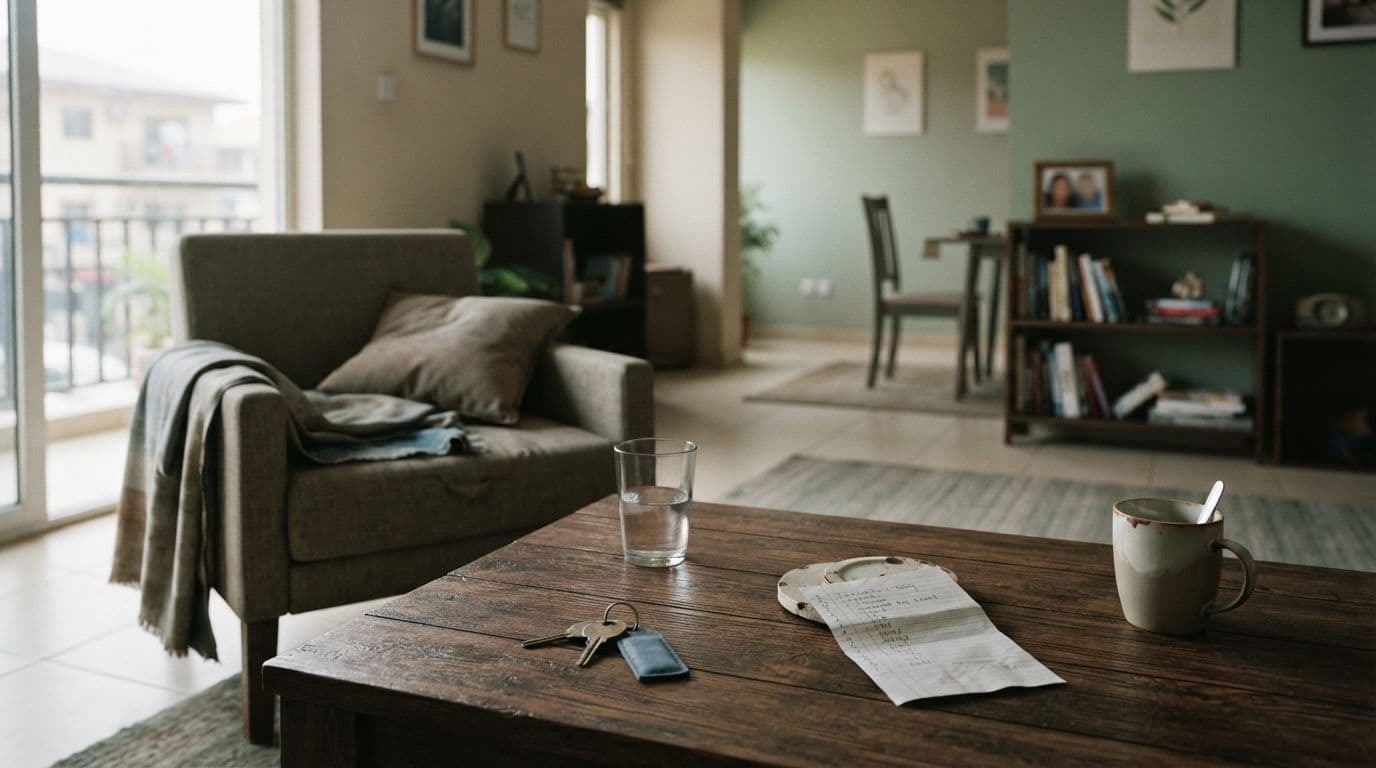
The whistling kettle on the two-burner gas cooker reached a screeching pitch at the exact moment Tunde tried to unmute his microphone for an urgent client call. His laptop sat precariously on an overturned carton because the small wooden dining table was already buried under his flatmate Segun’s camera gear, unwashed ceramic mugs, and a drying dish rack. Across the narrow corridor, the shared bathroom door clicked open, venting a dense cloud of eucalyptus steam directly into the sitting room.
"Segun, abeg turn down the gas!" Tunde called out, pressing his right palm hard against his ear to block the hiss.
Segun stepped out of the kitchen barefoot, holding a half-sliced loaf of Agege bread and a butter knife. "Bro, you saw me putting water on the cooker before you sat down there. The back bedroom is completely free if you need absolute silence right now."
"The back bedroom has zero natural light, and that multi-socket extension you bought is throwing sparks again," Tunde replied, his voice tightening into that sharp, guarded register people use when they secretly believe they are the only considerate adult on the premises.
This was not an isolated squabble over breakfast. It was the daily reality of managing shared flat privacy across a three-bedroom apartment in Yaba, shared among four working adults with clashing work hours, thin partition walls, and an ever-expanding backlog of unspoken grievances.
The Invisible Ledger That Quietly Poisons Shared Spaces
When four working professionals share a compact flat in a high-density city, physical space disappears first. The immediate casualty that follows is domestic goodwill. In its place, residents quietly construct an invisible ledger: a private mental tally where every noisy late-night phone call, unwashed stainless-steel pot, and unannounced weekend guest is logged as an outstanding personal debt.
For three months, Tunde had been keeping score. In his mind, buying the twenty-litre water dispenser refills on schedule and rarely hosting weekday guests earned him an unwritten entitlement to quiet mornings in the parlour. Segun operated on an equally firm, unspoken balance sheet. Because Segun covered a larger portion of the monthly generator diesel levy and regularly wiped down the sticky grease on the kitchen tiles after everyone rushed out for work, he assumed the sitting room was fair game as his personal editing studio.
Neither of them had ever verbalised these tradeoffs. They simply piled up silent resentment, waiting for the other person to intuitively recognise their personal contributions and adjust their behaviour out of gratitude.
As explored in our look at how your shared parlour is not an after-hours reception lounge, domestic friction rarely stems from deliberate malice. It grows because people assume shared territory naturally governs itself through common sense, forgetting that every housemate moves in with completely different expectations of what home life ought to look like.
Why Subtle Hints and Door Slams Always Fail
Scorekeeping survives on the flawed belief that considerate flatmates should simply know when they are causing friction. When someone leaves an overflowing laundry hamper on the only comfortable armchair or paces the hallway during a loudspeaker meeting, the initial impulse is often non-verbal: a theatrical sigh, a sharp side-eye, or a bedroom door pulled shut with deliberate force.
That calculated door slam accomplishes nothing. It signals irritation without explaining the actual boundary or proposing a workable compromise.
Co-living dynamics deteriorate quickly when subtle resentment replaces direct, everyday communication. Gottman’s research on rituals of connection underscores that relationships stay resilient when partners actively check in and clarify needs rather than letting assumptions dictate the climate. While domestic flatmates are not romantic partners, sharing tight living quarters requires the exact same commitment to transparent operational dialogue.
When you keep a mental scorecard, you penalise your housemate for breaking rules they were never told existed. Segun genuinely believed the parlour was an open workspace during the day because no one had ever said, "I have high-stakes client presentations between 9:00 AM and 11:00 AM; can we agree to keep the sitting room quiet during that specific window?"
Instead, Tunde endured the noise in silence, catalogued the disruption as personal disrespect, and quietly retaliated by leaving the passage light switched on overnight to drain the shared pre-paid electricity units.
The Drain of Kitchen Venting Versus Real Solutions
By Saturday afternoon, the apartment's unspoken tensions hit a wall. Fola, the third flatmate, returned from the local market carrying heavy plastic bags of food items, only to discover the kitchen sink packed with oily pots and the dining floor obstructed by Segun’s heavy tripod legs.
Rather than asking Segun to clear his equipment, Fola went straight into Tunde’s bedroom, shut the door, and spent forty minutes running through Segun’s domestic shortcomings. They compared notes. They reinforced each other’s annoyance. They dredged up incidents from four months earlier, recounting the Friday Segun hosted friends until 2:00 AM and the weekend his visiting brother took over the living room sofa without notice.
Private venting delivers instant emotional relief, but it functions like an emotional sedative: it numbs the immediate irritation while leaving the root cause untouched. By transforming ordinary logistical friction into an exclusive two-person grievance committee, Tunde and Fola turned a manageable spatial squeeze into an uncomfortable household divide.
This dynamic mirrors the way friendship circles fracture when people avoid direct interaction, as shown in trading the active group chat for an honest face-to-face ask. Bypassing direct, slightly uncomfortable conversations in favour of backchannel commiseration guarantees that the eventual confrontation will be messy and resentful rather than clear and practical.
Trading the Internal Ledger for Clear, Neutral Requests
Ending the cycle of scorekeeping requires replacing silent tallies with simple, low-stakes verbal requests. A direct ask is neither an aggressive demand nor an apology for taking up space; it is simply neutral operational information.
When flatmates keep score, a loud video in the common area produces an angry glare, a noisy retreat to the bedroom, and a string of complaining texts to friends outside the flat. A direct approach replaces that tension with a plain sentence: "I am finishing a report that needs complete focus for the next hour; could you use earphones or watch in the bedroom until four o'clock?"
Similarly, when someone leaves dirty cookware behind, scorekeeping prompts a flatmate to scrub the pan in silent fury while deliberately ignoring the overflowing rubbish bin later that night. A direct request strips away the drama: "I need the stove in ten minutes to cook dinner; please wash your frying pan so the burner is free."
These plain requests avoid sweeping character judgments. They do not label the other person as selfish, thoughtless, or undisciplined. Instead, they identify a concrete spatial bottleneck and state the needed adjustment without unnecessary heat.
According to findings published by the Greater Good Science Center on how adults create community through shared activity, cohesive groups thrive when members share clear boundaries and intentional frameworks rather than relying on ambient, uncoordinated cooperation. In a home, that cooperative framework is built through routine, unemotional negotiation over everyday spaces.
Unspoken Seniority and the Illusion of Territory
In many shared city flats, scorekeeping attaches itself to unspoken financial and logistical hierarchies. The person who originally found the apartment listing, the tenant who deals directly with the estate caretaker, or the flatmate who pays an extra share for fast internet often assumes an unwritten veto power over common areas.
When one flatmate works remotely from the communal dining table every day, the space easily drifts into an informal private office without anyone explicitly consenting to the arrangement. The remote worker feels justified because their timely payment keeps the inverter running. Meanwhile, the flatmate returning after three hours in gridlock traffic feels completely locked out of the very parlour their rent helps cover.
Because neither party states their physical needs out loud, silent territorial disputes take root. The commuting flatmate plays TikTok videos without headphones out of spite, while the remote worker scatters extension cords across the walkway. Both parties believe their financial input gives them moral superiority. Healthy shared flat privacy requires acknowledging that financial contributions do not buy unvoiced domestic privileges; shared territory requires explicit, ongoing agreement.
Fatigue, Heat, and Misread Boundaries
When living without physical buffers, one person’s workplace exhaustion quickly alters the emotional climate of the whole apartment. Stepping through the front door after a brutal commute in the heat leaves very little patience for navigating minor domestic inconveniences. In that depleted condition, a stack of soaking bowls in the basin stops looking like an ordinary chore delay and begins to feel like a deliberate personal attack.
Housemates often misread deep exhaustion as hostility. One person requires absolute quiet to recharge, while another wants to unwind by talking about their day over dinner in the kitchen. When these different recovery styles collide without clear communication, scorekeeping explodes.
Treating individual energy levels as neutral facts prevents unnecessary drama. Instead of leaving housemates to decode your mood from the force of your footsteps, a brief spoken update removes the guesswork: "My workday was completely draining; I am heading straight into my room to rest until tomorrow." That simple statement clears the air, allowing everyone else to use the apartment without feeling judged or anxious.
Practical House Agreements That Actually Last
On Sunday evening, the four Yaba flatmates gathered in the parlour to fix their routine before another workweek started. They skipped grand lectures about consideration and focused strictly on clear, executable house rules.
They agreed that the sitting room would remain a designated quiet zone between 8:30 AM and 1:00 PM on weekdays, meaning any loudspeaker calls or collaborative meetings had to move into individual bedrooms. They set a firm clean-sink rule during peak cooking windows, requiring pots to be washed or moved off the burners immediately so the next person could prepare food. Crucially, they agreed that when an item is blocking a shared walkway, the person inconvenienced must ask for it to be cleared right away instead of letting it sit for days as unspoken evidence of bad manners.
Sharing an apartment with working adults will never be entirely smooth. Differing work schedules, unexpected power cuts, and limited square metres will always produce occasional friction. But a functional household is not defined by zero conflict; it is sustained by housemates who abandon the silent scorecard and simply ask for what they need.
Keep reading
Read next.

Why the Quiet Friend Should Not Have to Host the Reunion
When reconnecting with an old friend turns into an uninvited weekend in your parlour, setting an honest boundary outside your home is the only way to save the bond.
Read the story
Four Chairs at Mende: Surviving the Awkward First Compromise of Unequal Social Capacities
When one partner needs buzzing rooms and the other runs out of steam by 9 PM, the first step towards a sustainable weekend isn't perfection—it is surviving a stiff, low-stakes experiment.
Read the story
A Standby Spot at Maryland Replaces the Weekly Chore of Social Planning
When one friend carries the mental load of every weekend plan, quiet resentment grows. A low-friction hangout ritual replaces the exhaustion of endless coordination.
Read the story