
A Foreign-Earned Salary Turned Our Casual Table Into a Test
When one friend secures a foreign-currency contract, weekend meetups quickly shift from relaxed catch-ups into high-stakes negotiations over venue costs.
An 18plus originalBy 18plus Editorial

The leather-bound menu at the Victoria Island rooftop arrived without a single laminated edge. Fola skipped the signature cocktail list entirely, turning straight to the non-alcoholic beverages to gauge the baseline damage. A small bottle of still water was ₦4,500. A single starter portion of peppered calamari sat at ₦22,000.
Across from him, Dami was already snapping his fingers to get the attention of two different waiters. He ordered two specialty gin mixes and a platter of jumbo prawns before anyone else had even settled into their chairs. Dami had spent five years enduring the exact same dry-season commutes from Ikeja to Marina as the rest of them, juggling power banks, sweating through shared cabs, and complaining about fuel hikes. Six months ago, an overseas logistics outfit contracted him as a remote operations lead, paying him directly in foreign currency. He promptly relocated to a serviced estate in Lekki Phase 1, installed an uninterruptible solar rig, and took over deciding where the circle met every Saturday.
“Order whatever you want,” Dami said, tapping his metallic phone casing against the glass table. “Their lamb chops here are top-tier. Don’t do small plates.”
Fola smiled, kept his thumb firmly pressed over the edge of the leather folder, and calculated what his disposable cash looked like after settling quarterly service charges in Yaba. Beside him, Nkem was staring down at her screen, doing the silent arithmetic of someone whose civil service salary had not shifted while her weekly transport costs had doubled. This casual table was no longer an easy sanctuary at the end of a long work week.
The Unspoken Price Tag on Being Present
Career windfalls among peers rarely create friction through deliberate arrogance. Instead, the rift enters sideways through genuine enthusiasm, newfound convenience, and upgraded tastes. For four years, their routine was predictable: grilled fish off Glover Road, pepper soup by the stadium, or soft drinks in a humid parlour while arguing over Premier League transfers.
Those earlier spaces carried almost no financial barrier. If you had ₦5,000 to spare, you could nurse a single malt drink for three hours and walk away without guilt or debt. But once Dami’s disposable income shifted into hard currency, the tone of the Thursday group chat transformed. Dami would drop short video clips highlighting valet parking, moody blue lighting, and artisanal cuts of meat. He was not trying to isolate his childhood companions; he simply wanted the people he loved most around him while enjoying the comforts he had worked exhausting hours to secure.
Yet changing the location fundamentally changes the social contract. When a circle moves from accessible neighborhood spots to venues built around luxury hospitality, the lower earner carries an exhausting psychological toll just stepping through the door. You are no longer just catching up with friends; you are auditing your basic survival reserves for the week. The strain mirrors the silent tension that develops when split checks and silent grudges ruin a routine after people order without shared agreement.
When Generosity Begins to Feel Like Patronage
By ten in the evening, the table was covered in empty ramekins, half-drained mocktails, and the bones of Dami’s imported chops. The waiter placed a heavy black folder between them. The total stood at ₦184,000 for four people.
“Let me take half, then the three of you can share whatever remains,” Dami said smoothly, sliding a metallic debit card onto the leather sleeve.
“No, split it equally four ways,” Nkem said, her tone sharp and unyielding. “Nobody asked you to sponsor this evening.”
“Nkem, relax, it is really not a problem,” Dami said, chuckling as he waved his card. “I ordered the extra drinks anyway. It doesn't make any difference to me.”
“It makes a difference to me,” Nkem answered, her banking app already open on her phone screen. “If we go out together, we pay together. If I cannot afford the place we pick, I should sit in my house.”
The silence that followed was heavy and immediate. The waiter stood two paces back, payment terminal idling in hand. What Dami saw as effortless kindness felt to Nkem like an uncomfortable demotion into dependency. To let him cover the lion's share week after week meant accepting a subordinate position at the table—becoming an accompanied guest rather than a full peer sharing a joint evening.
When incomes diverge sharply, the arithmetic of friendship becomes precarious. If the lower earner insists on paying an equal share of high-end bills, they compromise their own groceries and utility budgets. If they accept the subsidy, they surrender their feeling of independence. Neither choice protects the relaxed equality that formed the friendship in the beginning.
Activity-Based Spaces Remove the Competition
Friendships need consistent contact to survive, but the physical setting of that contact dictates whether people feel secure or defensive. Sociological findings on participating in low-barrier community activities show that shared, non-commercial pursuits allow people across differing economic backgrounds to build durable bonds without constant status friction.
When every gathering demands heavy spending, the outing stops functioning as a bridge and starts acting as an economic filter. The friends who cannot absorb the cost begin crafting discreet exits. They cite unexpected gridlock on the bridge, urgent family errands, or sudden exhaustion, choosing to appear unreliable rather than openly confess that the chosen restaurant is simply outside their means.
That gradual retreat damages a circle far more than a blunt argument. Over three months, Fola had watched Nkem quietly decline three consecutive meetups. Dami interpreted her absence as disinterest or growing apart, completely missing that her withdrawal began the moment their Saturday plans moved across the toll gate to fine-dining venues.
Sustained relationships depend on regular, predictable patterns of contact. Relationship research on rituals that sustain connection underscores that simple, repeatable habits nurture trust far more effectively than irregular, costly spectacles. When a group discards the modest routines that originally held them together, they discard the very safety net that made vulnerability possible.
Bypassing the Group Chat for a Private Call
On Sunday afternoon, Fola decided against sending a long paragraph into the active WhatsApp thread. He knew that addressing money in front of everyone usually invited performative jokes, sarcasm, or defensive claims of stinginess.
He called Dami directly while standing on his balcony in Yaba.
“Dami, we need to talk about where we sit next Saturday,” Fola said plainly.
“Did something go wrong? You didn’t like the food yesterday? The place was solid now.”
“The food was fine, Dami. But spending ₦45,000 on a standard Saturday hangout is not sustainable for Nkem, and honestly, it is squeezing me too.”
Dami went quiet on the other end. For several seconds, Fola wondered whether his friend would take offense or offer to pay for everyone indefinitely. When Dami finally spoke, he sounded puzzled rather than defensive. “Why didn't she just say that? You guys know I have zero issue settling the bill when we go to nice places.”
“Because nobody wants to feel like a charity case just to see their friends,” Fola answered. “You earned your contract and you should enjoy your money. But if seeing you means sitting in spots where our monthly grocery budget evaporates in two hours, people are just going to stop picking up your calls.”
Handling the friction required stepping outside the group banter to address the underlying discomfort directly. Moving past digital deflection to speak candidly is often the only way to safeguard old bonds, an approach proven when trading group chat banter for honest conversations.
Dami let out a slow sigh. “I genuinely thought I was making things easier and more comfortable for us. I didn't want us sweating in noisy spots.”
“There is a massive middle ground between sweating in a dark room and spending a quarter of a civil service wage on lamb,” Fola said.
The Secondary Costs of Upscale Gatherings
Income disparity rarely stops at the final food bill; it shapes the entire logistics of an evening. When a plan is set at an exclusive Island lounge, the financial drain starts hours before anyone looks at a menu. An earner balancing a strict budget must factor in surge pricing on ride-hailing apps, fuel consumption in crawling traffic, and the unspoken pressure to match the dress standards of a luxury venue.
For Nkem, an evening out with Dami meant budgeting far beyond her plate. It meant calculating whether her wardrobe fit the aesthetic expectations of the room and whether she had enough reserve cash to absorb an inflated ride home after midnight. The mental exhaustion of navigating these hidden expectations often outweighs the price of the meal itself.
When higher earners select locations based solely on personal comfort, they inadvertently push these collateral expenses onto everyone else. The lower earner must either shoulder the strain in silence or endure the embarrassment of repeatedly explaining why a cross-town trip creates a personal crisis. Understanding these unseen costs is essential for preventing quiet resentment from eroding long-term companionship.
Keeping the Table Accessible
The following weekend, the group chat received a completely different sort of update. Rather than sharing an aesthetic promo video from an upscale cocktail lounge, Dami dropped a map pin for a shaded, open-air garden space in Surulere known for grilled fish and cold drinks.
“Meeting here by five,” Dami texted. “I’m bringing a Scrabble board and cards.”
Nkem was the first to send a confirmation. When they arrived, there was no valet attendant, no velvet rope, and no inflated charge for bottled water. The drinks arrived in simple crates, the plastic chairs were sturdy, and the bill at the end of the night cost each person less than what they had paid in bridge tolls the week before.
Adult friendships do not require identical bank statements or dishonest performances of equality. But keeping those bonds intact requires that the person with more resources avoids turning their personal lifestyle into the mandatory cover charge for the entire group. The space has to remain accessible enough for everyone to pull up a chair without quietly checking their balance beneath the table.
Keep reading
Read next.
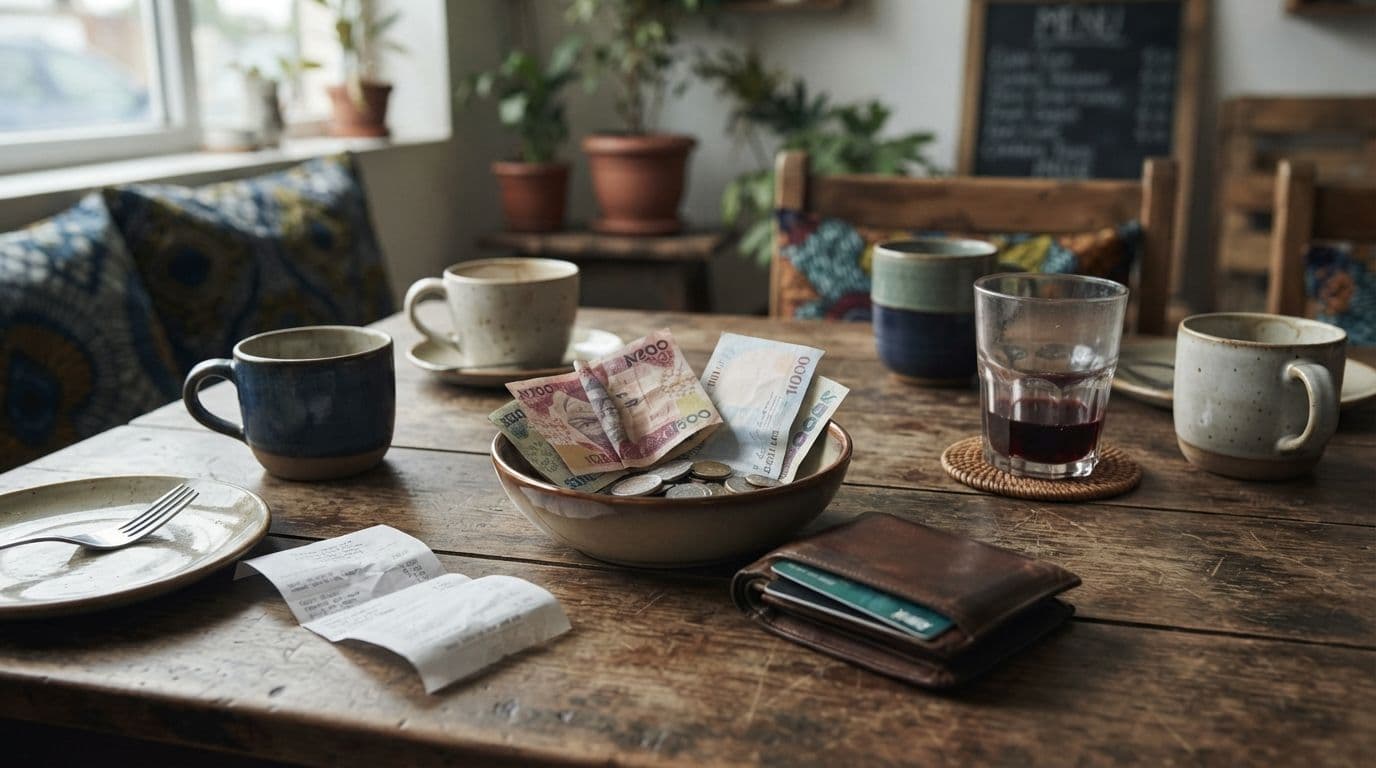
Split Checks and Silent Grudges: Fixing the Costly Weekend Routine
When differing career jumps inflate the price of catching up, polite silence around rising bills tests long-standing friendships far more than honest money boundaries ever could.
Read the story
Trading the Active Group Chat for an Honest Face-to-Face Ask
When memes and quick reactions replace real plans, resentment builds in silence. Here is how four adult friends stopped keeping score and met again.
Read the story
Your Shared Parlour Is Not an After-Hours Reception Lounge
When an extroverted flatmate runs an open house in a shared flat, the quiet resident ends up paying rent for zero privacy. Here is how to stop involuntary hosting.
Read the story