
One Quick Card Game Cleared Our Cramped Parlour Standoff
When three flatmates share a tiny living space with zero privacy, calling an earnest summit causes panic. A fifteen-minute game of cards shifts the dynamic faster.
Original fictionBy 18plus Editorial
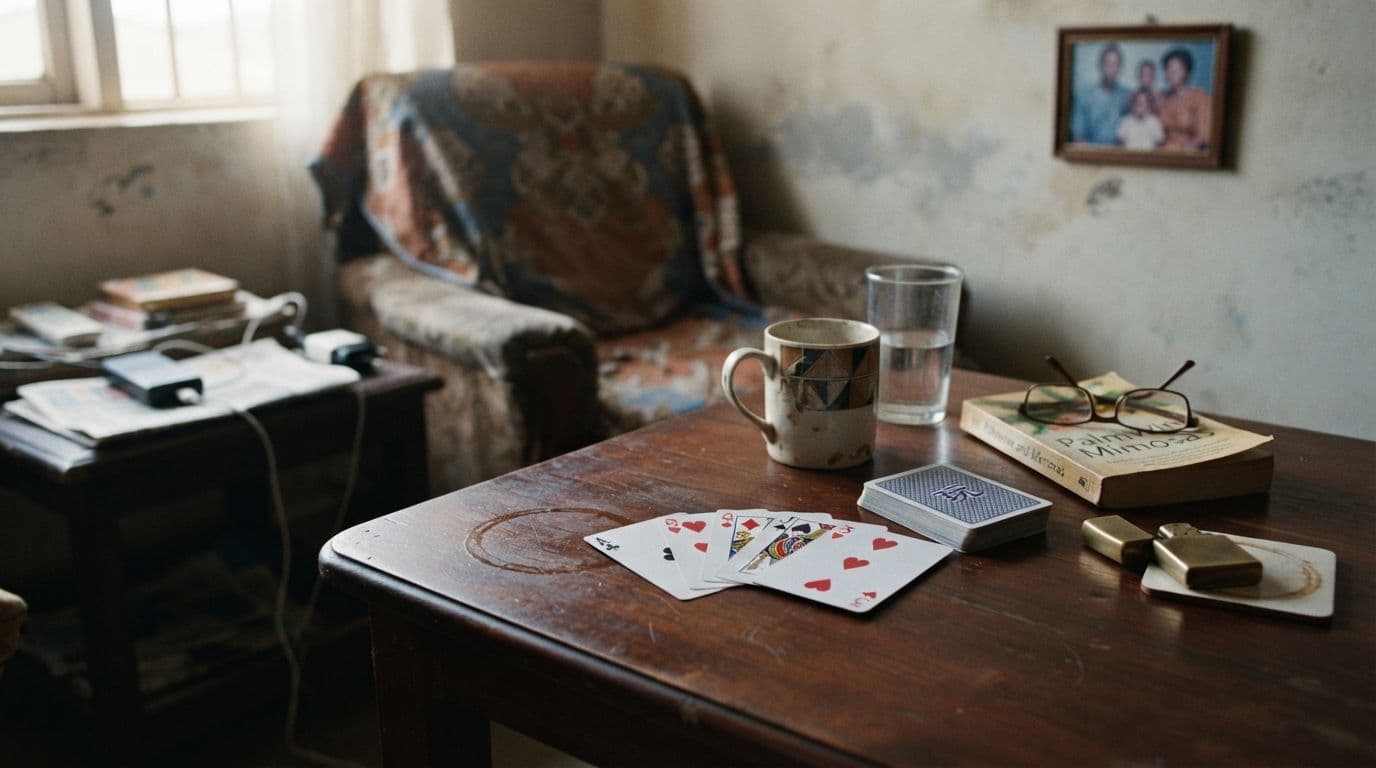
Fiction: The following scene portrays an invented adult living arrangement.
Chuka took his work calls on speaker while pacing the three paces of rug between the sofa and the dining table. In a two-bedroom apartment off Commercial Avenue where nobody had personal space, those phone calls turned the common area into an echo chamber. Amina stayed late in the kitchen over simmering sauce just to dodge the noise, while Yemi stared at her open spreadsheet, seething in place. Calling a formal house meeting to enforce house manners felt like issuing an ultimatum that would leave everyone defensive.
Instead of a summit, Amina carried a standard deck of cards to the low glass table, tapped the surface twice, and made a distinct bid. "Chuka, pause that call for fifteen minutes. One hand of Whist. Whoever takes the fewest tricks scrubs the yam pot."
The Trap of the Solemn House Meeting
When adult flatmates share quarters without enough buffer space, irritation builds quietly until someone wants to draft an agenda. You tally up loud calls, unwashed cups, and hijacked sofas until calling an official house conference feels necessary. But scheduling a formal sit-down usually triggers panic. Housemates brace for criticism, calculate who contributes more to the electricity units, or agree to rigid rules they immediately break just to leave the room.
Demanding an earnest talk about boundaries treats an ordinary living squeeze as an open dispute. In tight flats where your shared parlour is not the default weekend hangout spot, tension rarely comes from bad intent; it comes from sensory saturation. Research highlighted by the Greater Good Science Center on community play points out that low-stakes activities let people assemble without feeling evaluated. Moving the focus to an external task breaks down defensive posture faster than demanding emotional vulnerability.
Why a Bounded Ask Defuses the Room
Amina’s small ask removed the pressure by setting clear parameters:
- A firm finish line: Fifteen minutes is easy to accept. Chuka could drop his phone without feeling trapped in an open-ended debate. * A mechanical task: They were tracking trumps and playing cards, not dissecting each other's habits. * A low-stakes domestic chore: The loser washed the dinner pot. It acknowledged flat chores without turning into a moral lecture.
In close quarters, quiet withdrawal often looks like hostility. When someone darts into their room right after work, flatmates assume there is bad blood. Sharing a brief activity bridges that gap. Relationship researcher John Gottman points out that small, regular interactions—what he terms rituals of connection—build familiarity and ease daily strain. In a shared flat, an intentional pause like a quick card game shifts flatmates from territorial obstacles back into people sharing a home.
Watching Chuka misplay a spade and groan as Amina swept the board broke the parlour's cold atmosphere. He stopped feeling like an intrusive phone voice on the rug; he was just an ordinary flatmate having a clumsy turn.
From a Shared Hand to an Honest Boundary
A card game does not resolve noise problems on its own. It will not stop stray footwear from blocking the doorway or muffle Zoom calls during work hours. What it does is establish enough goodwill so an ordinary boundary request does not feel like an eviction warning.
Later that evening, after Chuka finished scouring the pot in the sink, Yemi walked into the kitchen to fill her kettle.
"Chuka, quick one," she said, keeping her tone matter-of-fact. "Tomorrow from seven, I have a client call on my laptop. Can we keep the parlour low-noise until eight-thirty?"
"No problem at all," Chuka said, wiping down the edge of the sink. "I’ll take my updates out on the balcony or finish them early."
If Yemi had raised that demand while his call was blaring across the room earlier in the evening, Chuka would have resisted, likely arguing about his equal share of the rent. Because they had shared a lighthearted fifteen minutes together, the boundary felt like simple domestic coordination between peers.
Knowing When to Walk Back to Your Room
The most critical part of an invitation in a compact home is knowing when to exit. When an impromptu hangout works, the urge is to let it roll into an all-night affair, which recreates the lack of privacy all over again. Knowing when to end an evening is addressed directly in the twenty-minute evening reset that restored peace in a tight flat.
Amina resisted proposing a rematch. Once the cards were played and the chore was handled, she gathered the deck, slid it into its box, and went back into her room, pulling the door shut behind her. She returned the living room to Chuka and gave Yemi the quiet rug.
Living in a high-density apartment without private hallways does not require round-the-clock bonding or awkward formal tribunals. It requires small, direct invitations that break silent resentment, backed by the discipline to step away when the game ends.
Keep reading
Read next.
Bolting the Bedroom Door at Mende: When Shared Flat Banter Wears Thin
Joking about sharing a cramped two-bedroom keeps the peace until client calls overlap, and shutting a bedroom door starts looking like a personal insult.
Read the story
Three Flatmates, One Parlour Table, and a Clumsy Whist Deck
When three flatmates share a cramped parlour with no privacy, attempting a new shared routine feels exposed and awkward. Here is how one household made room for it.
Read the story
Close the Living Room Door: Handling Unplanned Group Visits in a Small Flat
Shut down unplanned group visits to your flat within five minutes by answering directly in the group thread and offering a neutral outdoor venue instead.
Read the story