
The Twenty-Minute Evening Reset That Restored Peace in a Tight Flat
When two flatmates have no buffer in a compact apartment, forced polite chatter becomes exhausting. A timed evening anchor stopped the friction without heavy talks.
Original fictionBy 18plus Editorial
Editor’s note: This story is a work of fiction. Characters and circumstances are invented to explore practical everyday dilemmas.
By seven in the evening, the air in the Surulere two-bedroom apartment was always thick with unspoken irritation. The layout offered no real insulation: the small passage connected two thin-doored rooms directly to a three-seater parlour. If Segun cleared his throat at the dining table, Nnamdi heard it from his bed. If Nnamdi took a brief work call on speaker, Segun lost focus at his desk.
Neither could afford to move to an apartment with separate corridors or a private balcony. Navigating shared flat privacy became their most exhausting daily chore because every entrance felt like an intrusion, and every greeting felt like the start of an obligation neither had the energy to sustain.
The Friction of Constant Visibility
When two adults share a small space, the biggest drain is rarely the physical clutter; it is the demand for continuous performance. In an open flat, walking from your bedroom to the kitchen to fetch cold water requires a social face. You have to acknowledge the other person, gauge their mood, or offer a polite summary of your day.
For months, Segun and Nnamdi tried handling this with strained, elaborate politeness. When Nnamdi walked in after two hours in traffic from Victoria Island, Segun would look up from his desk in the parlour and ask detailed questions about the commute. Nnamdi, exhausted and holding a plastic bag of dinner, would stand awkwardly by the door answering out of duty.
Other nights, they swung to the opposite extreme: total, tense silence. Nnamdi would slip into his room, shut the door firmly, and stay there until he was sure Segun had turned off the parlour light. Both approaches failed. One demanded too much small talk, while the other turned normal apartment life into an evasive routine.
As explored in navigating whether your shared parlour is not an after-hours reception lounge, living rooms in tight apartments quickly become battlegrounds when expectations remain unspoken.
Replacing the Obligation With a Low-Stakes Anchor
Research on social habits highlights that connection does not always require deep, emotional processing. In many cases, shared, low-effort activities lower the pressure of showing up because the activity itself serves as the focus rather than personal performance. According to research published by the Greater Good Science Center, people participating in activity-based groups were "28 percentage points more likely to report strong social support" because shared tasks provide a natural entry point without the strain of performance.
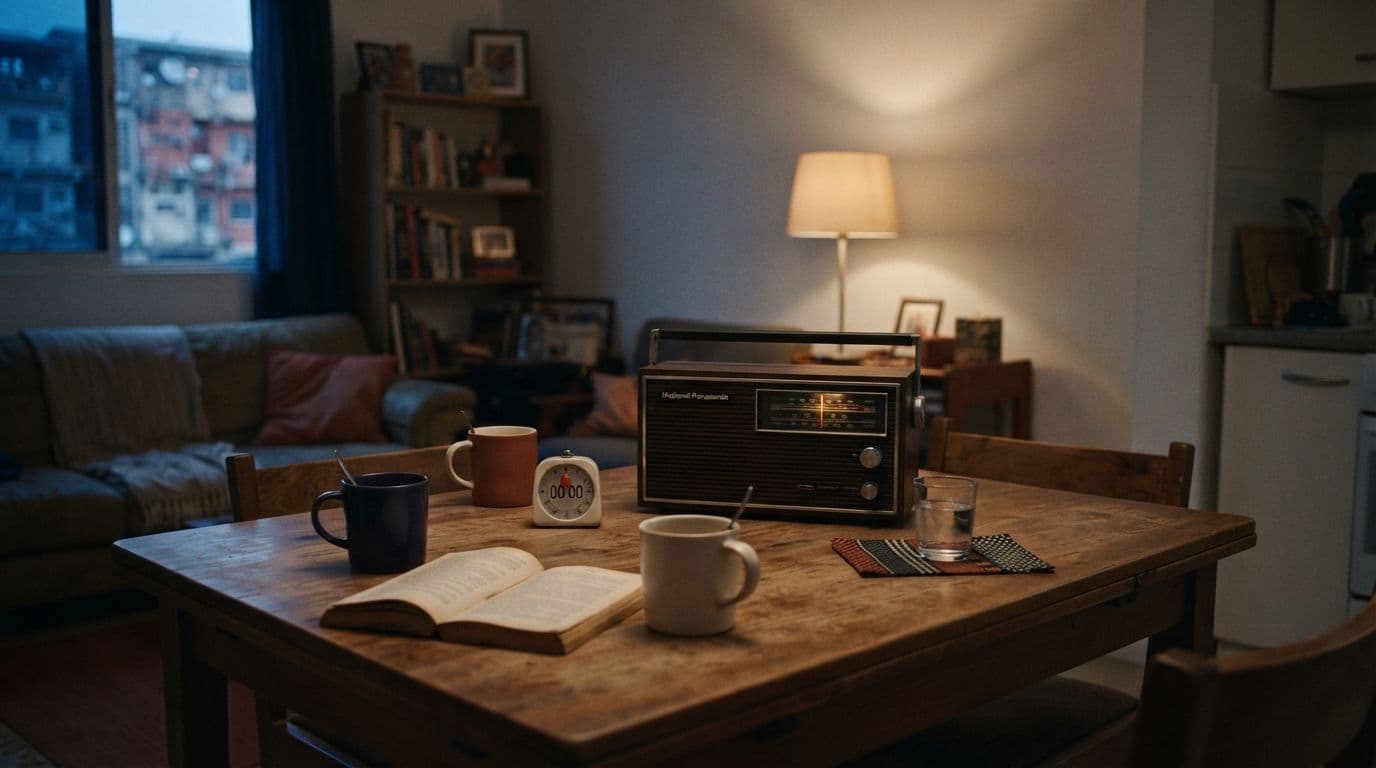
The breakthrough came on a Tuesday when the inverter battery was low, leaving only one standing fan operational in the parlour. Instead of retreating to sweat behind closed doors or attempting a heavy catch-up, Segun brought out an old plastic radio and set a twenty-minute timer on his phone.
"Let's listen to the evening news round-up at eight," Segun suggested plainly. "After that, whoever wants the parlour can have it, or we both go inside."
It was specific, brief, and had a clear ending. There was no expectation to debate the news or explain how their respective workdays had gone. They sat on opposite ends of the sofa, drank water, listened to the broadcast, made occasional dry remarks about the headlines, and when the timer buzzed, Nnamdi stood up and went to his room without needing an excuse.
Why Small Rituals Protect Shared Flat Privacy
Creating a repeatable evening marker removed the guesswork from their living arrangement. When people know exactly when interaction starts and ends, they stop dreading encounters in common areas. As Gottman relationship research notes, intentional daily rituals create shared meaning and reduce external stress.
A functional shared-space ritual needs three concrete elements:
- A distinct stopping point: An open-ended hangout invites lingering resentment. A game that lasts fifteen minutes, a single radio broadcast, or brewing tea sets a natural boundary. * Zero requirement for emotional vulnerability: After a demanding workday, asking a flatmate to recount their problems creates friction. The activity should occupy the attention so neither person has to carry the conversation alone. * Full permission to disengage: The ritual fails if leaving the room feels like an insult. The end of the activity must serve as an automatic release.
When housemates set boundaries around common spaces—similar to what happens when you decide on unplugging the living room desk after remote work—the home stops feeling like a continuous negotiation.
The Shift to Predictable Peace
Within three weeks, the tension in the flat dropped noticeably. Segun no longer felt slighted when Nnamdi walked straight past him to change his clothes, because both knew the 8:00 PM radio reset was coming. Nnamdi no longer hid behind his bedroom door waiting for the parlour to clear.
They did not become best friends who spent every weekend together, and the walls of the flat did not get any thicker. But by replacing forced politeness with a clear, time-bound habit, they turned a cramped apartment into a shared home where both could finally breathe.
Keep reading
Read next.

Your Shared Parlour Is Not the Default Weekend Hangout Spot
When an outgoing partner turns the living room into a weekly social hub, the quiet partner loses their only sanctuary. Here is how couples untangle domestic hosting.
Read the story
Turn Away the Surprise Guest Without Wrecking the Friendship
When a close friend assumes being in the neighbourhood entitles them to your sofa, you do not have to let them in. Here is how to guard your door gracefully.
Read the story
You Do Not Owe Your Weekend to Your Partner's Hobby
Couples often turn personal leisure into forced companionship out of polite obligation. Here is how untangling weekend pastimes protects genuine intimacy.
Read the story