
Three Flatmates, One Parlour Table, and a Clumsy Whist Deck
When three flatmates share a cramped parlour with no privacy, attempting a new shared routine feels exposed and awkward. Here is how one household made room for it.
Original fictionBy 18plus Editorial
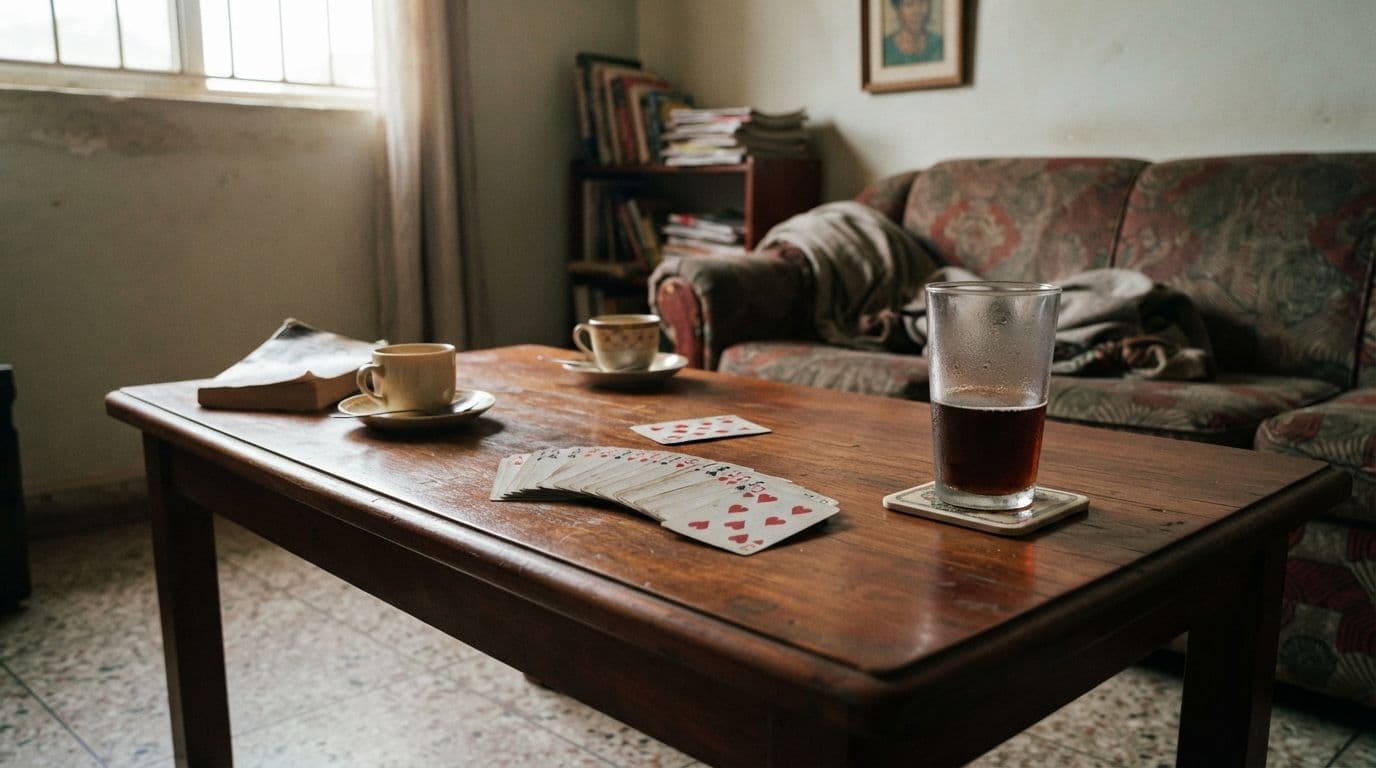
Fiction: The characters and domestic situation described below are an invented illustration of adult house-sharing dynamics.
By eight in the evening, the heat in the Surulere two-bedroom flat had pooled in the narrow passage between the kitchen and the small sitting room. Tunde sat on the edge of the two-seater sofa with his laptop perched on a low footstool, trying to edit a spreadsheet while his flatmate, Chuka, fried plantains three feet away behind the open counter. Every sizzle of hot groundnut oil cut straight across Tunde’s screen, while their third flatmate, Halima, sat cross-legged on the floor by the wall socket, waiting for her phone to charge.
There was no acoustic barrier in the apartment. If someone cleared their throat in the back corridor, everyone in the parlour heard it. For six months, the three had managed the tight space by retreating into defensive silence: headphones on, eyes glued to screens, speaking only to confirm who bought fuel for the small generator or whether the water tank was pumping.
The tension of being constantly visible
When a household has almost no physical separation, starting anything new feels intensely self-conscious. In a spacious house, you can pick up a sketchpad, practice a dialect, or sort out an old box of receipts in private. If you fail or look silly, nobody watches.
In a cramped layout, every action is an unspoken broadcast. If one person pulls out a notebook or suggests turning off the television, the others immediately wonder if they are being judged or crowded out. As explored in Why That Zero-Privacy Parlour Hangout Is Straining Your Shared Flat, shared quarters frequently slide into chilly politeness simply because nobody wants to trigger an uncomfortable scene in the only communal room.
Tunde wanted to break the heavy silence that settled over the flat every weeknight. He had bought a cheap pack of playing cards from a vendor near the bus park, intending to learn Whist. But sitting there holding the glossy blue cardboard box, the sheer visibility of the room made his hands hesitate. Dropping the cards on the central table felt like an audition nobody had agreed to attend.
Moving past the defensive joke
Chuka brought the fried plantain to the table in an enamel plate, setting it down between Tunde’s footstool and the edge of the rug.
"What is in that small pack?" Chuka asked, nodding at the cards in Tunde's hand. "You want to start betting pool in this house now?"
It was the standard domestic defence: turn any unfamiliar effort into a quick tease before it can become earnest. In tight quarters, gentle mockery is often used to neutralize the vulnerability of trying something different. When someone introduces a new habit—whether it is a screen-free evening or an unfamiliar household rhythm—the easiest response for everyone else is skepticism.
Tunde resisted the urge to shove the deck back into his work bag. "It’s just ordinary Whist," he said plainly, sliding the pack out of the cardboard sleeve. "I watched a short breakdown during lunch. Four players is standard, but three of us can deal out a dummy hand and see if the rules make sense for fifteen minutes."
Halima looked up from her phone. "I have two client messages to return before nine o'clock. If this is going to turn into a three-hour tournament, count me out."
"Fifteen minutes," Tunde repeated, dealing out cards directly onto the worn laminate table. "Once the plantain is finished, anyone who wants to go back to their screen packs their hand. No long story."
Setting a firm, modest boundary lowers the pressure immediately. When housemates know an attempt has an explicit end time and requires no emotional performance, they are far more willing to set down their defenses. As seen in The Twenty-Minute Evening Reset That Restored Peace in a Tight Flat, brief, bounded interaction allows people to connect without feeling trapped in an endless social obligation.
Learning to tolerate the clumsy start
The first five minutes were decidedly unpolished. Halima forgot which suit was trumps twice. Chuka kept accidentally revealing his cards while reaching across the table for food, and Tunde had to pause three times to check basic scoring rules on his phone.
When adults try new activities together, the early minutes are almost always stiff. Unlike children, who jump into games without worrying about looking foolish, working adults carry professional polish and guarded routines into their evenings. Sitting around a small table fumbling with cardboard cards feels childish until the mechanics take over.
Yet shared physical activities create a distinct social opening. Instead of forcing heavy conversation about how tired everyone is after the commute, a structured, low-stakes task gives everyone a neutral focal point. You are not inspecting each other; you are both looking at the table. Within ten minutes, Halima was disputing Chuka’s lead card, and Chuka was leaning over the table, genuinely calculating how to take the final trick.
Protecting individual space after the game
When the enamel plate was empty and the dummy hand was played out, Tunde gathered the deck and put the cards back into their box. He did not ask for a second round, nor did he declare that card night was now a mandatory weekly tradition.
That restraint is what keeps shared spaces livable. When an awkward first attempt goes reasonably well, the temptation is to immediately over-program it, turning a pleasant fifteen-minute break into an exhausting household requirement. As discussed in A Shared Flat Without Privacy Finds Relief in a Lazy Whist Match, domestic ease relies on being able to step into a shared moment and step right back out without penalty.
Halima stood up, unplugged her charger from the wall socket, and went into her room with her phone. Chuka took the greasy plate to the sink to wash, leaving the parlour quiet again. The flat was still small, the passage was still warm, and none of their privacy issues had vanished into thin air. But the tense, watchful silence had cleared, replaced by the simple knowledge that the table was there whenever anyone cared to deal.
Keep reading
Read next.
Close the Living Room Door: Handling Unplanned Group Visits in a Small Flat
Shut down unplanned group visits to your flat within five minutes by answering directly in the group thread and offering a neutral outdoor venue instead.
Read the story
Your Shared Parlour Is Not the Default Weekend Hangout Spot
When an outgoing partner turns the living room into a weekly social hub, the quiet partner loses their only sanctuary. Here is how couples untangle domestic hosting.
Read the story
Turn Away the Surprise Guest Without Wrecking the Friendship
When a close friend assumes being in the neighbourhood entitles them to your sofa, you do not have to let them in. Here is how to guard your door gracefully.
Read the story