
Drop the Social Secretary Badge: How to Stop Managing Every Group Hangout
When one person handles every reservation, arrival reminder, and split bill, banter easily turns into an unpaid job. Here is how to share the social planning fairly.

Being the friend who always organises every hangout usually begins as voluntary enthusiasm, but it quickly hardens into an unpaid administrative job. When a circle relies on one person to pick venues, reconcile schedules, and follow up on late arrivals, that person ends up carrying the logistical weight of the entire relationship.
Over time, group jokes about having a personal social coordinator stop sounding affectionate. The fix is not to stage a silent strike or cut people off, but to change the mechanics of how your group meets.
The Real Cost of Default Social Planning
Most default organizers end up in that position simply because they have a lower tolerance for group chat indecisiveness. When four people spend three days debating between Ikeja and Lekki, stepping in with a confirmed address feels faster than watching plans evaporate.
Yet organizing an adult outing involves continuous friction: tracking down vague RSVPs, managing unspoken budget limits, confirming generator schedules with venues, and absorbing the awkwardness when people show up two hours late. When life gets busy, that coordination stops feeling like fun. As explored in Ditching the Weekend Reservation: How Low-Stakes Asks Build Honest Community, high-maintenance plans place the heaviest burden on whoever hates conversational drift the most.
When you handle everything, your friends stop exercising their own planning muscles. They show up as consumers rather than contributors, waiting to be entertained rather than actively helping build the gathering.
Why Deliberate Silence Backfires
When default planners burn out, their first impulse is often to withdraw completely to test whether anyone else will take the lead.
This tactic almost always fails. Friends who are used to receiving calendar prompts do not interpret your silence as a request for help; they simply assume everyone is occupied with work. The group drifts into weeks of quiet, while the former planner stews in silent frustration.
Breaking the pattern requires direct clarity instead of social tests:
- Name your limits before the weekend rush: "I'd love to see everyone, but my week is packed and I can't put a plan together. Let me know where to meet you guys." * Delegate distinct pieces of logistics: "I can call ahead to check parking if someone else picks the spot and sorts the table." * Let loose suggestions sit: When someone drops a social media reel in the chat, resist the urge to immediately turn it into an itinerary. Let the person who suggested it propose the date and time.
As examined in Trading the Active Group Chat for an Honest Face-to-Face Ask, replacing fuzzy group prompts with clear, direct communication keeps friendships grounded.
Replacing Event Coordination With Simple Rituals
Friendships thrive when gatherings require almost zero advance logistics. Research on social bonding published by the Greater Good Science Center notes that repeated participation in low-stakes, shared activities builds connection more reliably than high-pressure events because it removes the friction of showing up.
Instead of elaborate dinners requiring reservations, deposits, and split-check spreadsheets, lean into standing routines. A recurring Sunday walk, a designated neighbourhood spot where people drop in as they finish work, or a quick game night on someone's parlour rug eliminates planning fatigue. When the format is predictable, no single person has to manage the room.
Keep reading
Read next.

A Twenty-Minute Walk Replaces the Exhausting Weekend Gathering
When one partner craves a full room and the other dreads the door handle, large social compromises often fail. A smaller, distinct invitation changes the entire weekend rhythm.
Read the story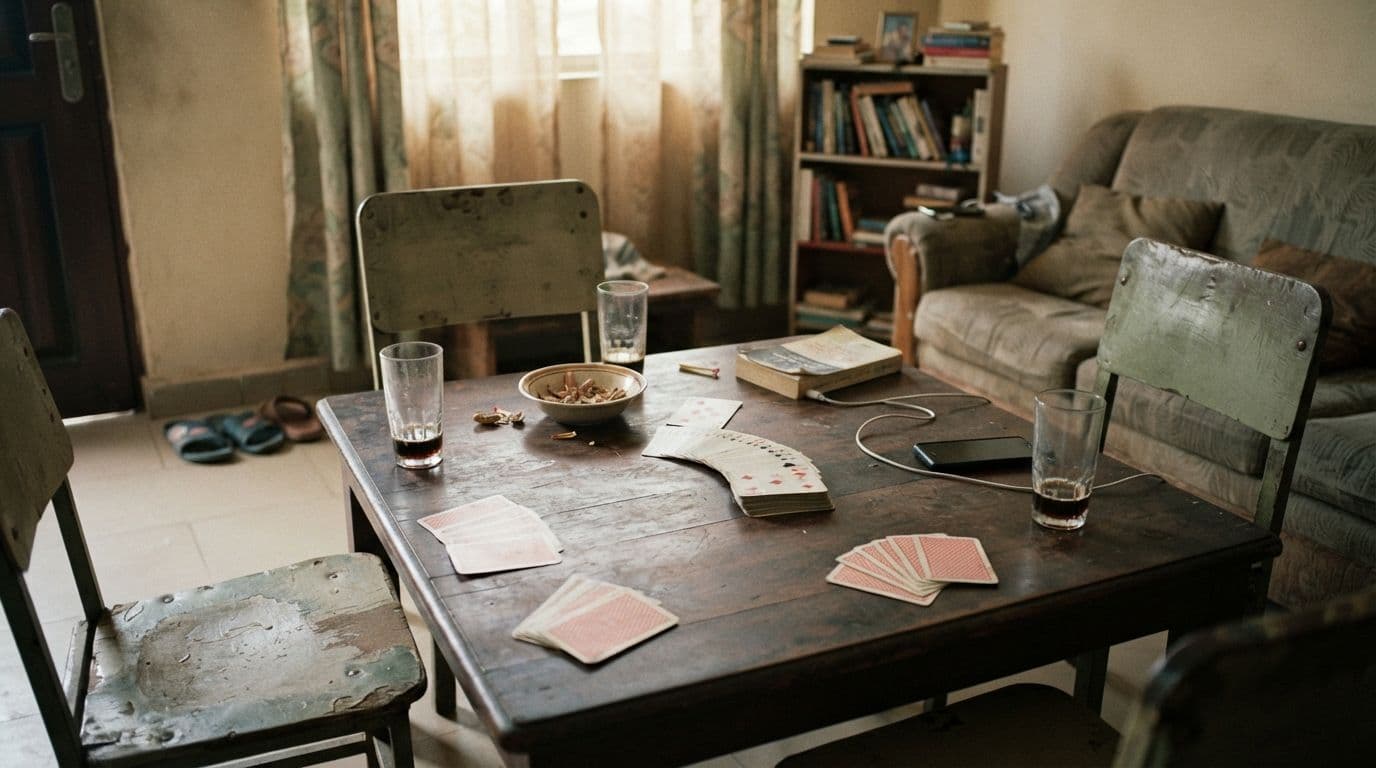
A Shared Flat Without Privacy Finds Relief in a Lazy Whist Match
When three flatmates in a cramped flat gave up waiting for personal space on a hot Saturday, an improvised card tournament turned cabin fever into genuine ease.
Read the story
Making Quality Time Work on an Exhausting Nigerian Workweek
Quality time does not require a four-hour dinner or a silent weekend getaway. Here is how to build practical connection into ordinary, busy workweeks.
Read the story