
Why a quiet person should not have to host every time
When a couple stops planning time together, domestic friction creeps in. Here is why the quieter partner should never shoulder all the hosting duty.
An 18plus originalBy 18plus Editorial
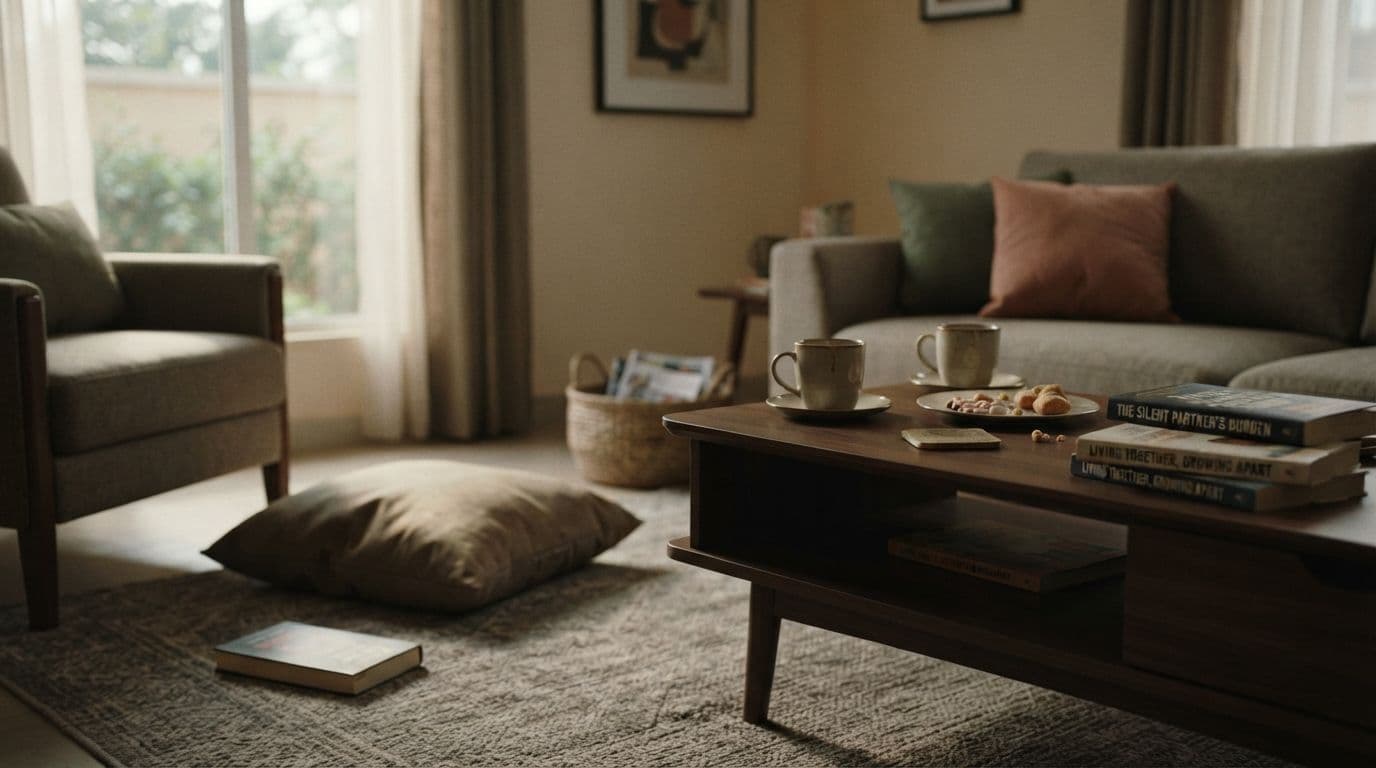
The generator outside coughed, sputtered twice, and died, plunging the Surulere apartment into a thick, humid quiet that was immediately filled by the hum of the inverter. Nnamdi didn’t look up from his laptop. Across the wooden dining table, Ejiro sighed, closing her notebook with a sharp snap that made the ceramic coffee mugs rattle.
“So,” Ejiro said, her voice tight. “My sister and her husband are coming over this Saturday. And your cousin wants to drop by on Sunday. That makes four weekends in a row our living room has doubled as an event centre.”
Nnamdi rubbed the back of his neck, wincing. “They just want to see us. You know how family can be.”
“No, Nnamdi. They want to see you, because you agree to everything, but I am the one clearing out the fridge, washing the extra plates, and making small talk until my jaws ache.” Ejiro stood up, pacing the tiled floor. “We stopped planning actual time for just the two of us months ago. Now our only shared project is hosting other people.”
It was a credible dilemma born of quiet drift. In many Nigerian homes, social life expands to fill every available weekend, turning domestic spaces into revolving doors. When couples neglect to carve out private rhythms, resentment builds in the corners. For relationships rich in intentional habits, connection requires deliberate boundaries, as noted in insights on rituals of connection. But when one partner is naturally introverted, the burden feels doubly heavy.
The Silent Accumulation of Domestic Labour
Hosting in Lagos is never just about opening a door; it is an elaborate logistical performance. There is the market run for fresh peppers and meat, the bargaining under the hot sun, the pre-cooking prep, and the eventual clean-up long after the last guest has driven down the street. When this falls disproportionately on one person, the imbalance breeds quiet resentment.
Nnamdi viewed hospitality as a harmless cultural default. In his family, keeping doors open was a mark of good character. To him, saying no felt inhospitable, almost rude. But Ejiro saw it differently. To her, every impromptu gathering was an invisible tax on her limited emotional energy. She wasn't just washing plates; she was spending currency she couldn't easily replenish.
This friction highlights a fundamental mismatch in how couples view their shared space. A home is supposed to be a sanctuary, a place to decompress from the chaotic traffic and workplace pressures of the city. When it constantly transforms into a venue, the quieter partner loses their primary site of recovery. Similar dynamics appear when managing everyday routines and domestic responsibilities, such as those discussed in receiving care without losing yourself.
Why the Introvert Bears the Brunt
In social dynamics, the person with the higher tolerance for quiet often loses out to the person who dreads awkward pauses. Nnamdi assumed Ejiro didn't mind the visitors because she was polite when they arrived. He mistook her social grace for genuine enthusiasm.
“I just don't see why you find it so draining,” Nnamdi offered cautiously, leaning back in his chair. “People come, we eat jollof, we laugh, they leave. It’s normal.”
“It’s normal for you because you sit back and nod while I run around checking if the AC is cooling and the drinks are cold,” Ejiro retorted. “You’re an ambivert who recharges by watching people chat. I need silence to hear my own thoughts again.”
This divergence is common. Community life matters deeply, and building a strong social fabric is rewarding, much like the communal bonds explored in studies on adult play and community. Yet, social scaffolding cannot come at the expense of the primary partnership. If the couple itself is starving for attention, entertaining outsiders only accelerates the decay.
The Trap of Accidental Isolation
When couples stop planning private dates, they drift into parallel lives within the same four walls. They share bills, rent, and grocery lists, but little else. The calendar fills up with weddings, naming ceremonies, and casual visits from extended family, leaving zero margin for spontaneity between the two people who started the household.
Ejiro pointed out that they hadn’t left the house together just for fun since their anniversary three months prior. Every outing was tied to an obligation. Even their Sundays, which used to belong to lazy mornings and long, unfiltered conversations, were now surrendered to visitors who dropped in unannounced because they knew Nnamdi would never turn them away.
This lack of boundaries creates a strange kind of loneliness. You are surrounded by noise, chatter, and visiting relatives, yet you feel entirely unseen by your partner. The home stops feeling like theirs and starts feeling like public property. Couples often navigate similar strains when balancing external pressures with private intimacy, as examined in a check-in, not a relationship performance review.
Redrawing the Boundaries Around the Front Door
Fixing this dynamic required Nnamdi to unlearn the reflex of automatic agreement. He had to accept that saying no to an extra visitor was not an act of malice, but an act of preservation for his marriage. They sat down with a blank wall calendar—not on their phones, where notifications constantly interrupted—and marked out sacred blocks of time.
“If my mother calls to say she’s coming over this weekend, what do we tell her?” Nnamdi asked, testing the new rule.
“We tell her we have plans,” Ejiro said firmly. “And our plan is to rest and stay out of each other's hair.”
It felt radical, almost transgressive in a society where family accessibility is treated as an absolute virtue. But boundaries are essential for long-term survival. As noted in guidance on a date at home that feels like a date, carving out dedicated space—even within the same walls—changes the emotional climate of a home.
Moving Past Resentment Through Clear Communication
Talk without action changes nothing, so they established a new protocol for social visits. No more spontaneous weekend hosting without a minimum of forty-eight hours of mutual agreement. If family members wanted to drop by, Nnamdi had to take full responsibility for the hosting duties: he would handle the drinks, the seating, and the clean-up afterward.
The first test came that very Saturday when an uncle called from Ikeja saying he was in the neighborhood. Nnamdi hesitated, looked at Ejiro reading quietly on the sofa, and took a deep breath.
“Ah, Uncle, we would have loved to host you today,” Nnamdi said smoothly into the phone, standing by the balcony. “We are actually right in the middle of some domestic chores and won't be able to receive guests. Let’s plan a proper visit for next weekend instead.”
When he hung up, the living room was quiet save for the whir of the inverter. Ejiro looked up, a slow, surprised smile breaking across her face.
Practical Steps to Reset Household Energy
Rebalancing a home overrun by social obligations does not require a dramatic breakup with extended family. It simply requires small, consistent operational shifts. First, couples must audit their calendars together, treating private time with the same gravity as a business meeting or a church service.
Second, the burden of hospitality must rotate or be explicitly assigned. If the more social partner insists on inviting people over, they must shoulder the invisible labor—the prep, the hosting, and the aftermath—without expecting the quiet partner to pick up the slack.
Finally, remember that protecting your domestic peace is not selfish. A relationship thrives when both people feel safe inside their own front door. When the noise outside is muted, the conversation inside finally has room to breathe.
The Hidden Logistics of Weekend Entertaining
When a household operates as an open-door hub, the actual physical labor is rarely distributed evenly. In many Lagos apartments, the partner who issues the casual invitation is often insulated from the messy reality of preparation. While one person extends a warm welcome over the phone, the other is quietly calculating whether there is enough cooking gas, checking if the blender works after the last power surge, and washing extra plates that have piled up in the sink.
This division creates an exhausting domestic imbalance. The partner doing the heavy lifting spends hours managing the kitchen, monitoring the generator fuel level, and ensuring guests are comfortable, all while sacrificing their own rest. By the time everyone leaves, the physical exhaustion is matched only by a deep mental fatigue. It turns what should be a day of rest into an unpaid shift in hospitality.
Addressing this requires a clear shift in accountability. If an impromptu visit is encouraged, the person who extended the invite must shoulder the responsibilities from start to finish. That means managing the market run, prepping the food, and cleaning up afterward without assuming the quieter partner will naturally step in to assist. When the logistical burden is shared or properly owned, spontaneous hosting loses its casual appeal for the person who always initiates it.
Protecting Domestic Space from Constant Inflow
A home functions best when it serves as a reliable retreat from the demands of the city. Lagos offers plenty of kinetic energy on the streets, in traffic, and at workplaces, meaning the front door needs to act as a firm boundary rather than a revolving gate. When every weekend is filled with visiting relatives, neighbors, and acquaintances, the living room loses its sanctuary status.
For introverted individuals, the constant presence of others drains their mental reserves rapidly. Even pleasant interactions require a performance of sorts—maintaining conversation, smiling through tiredness, and remaining alert in one's own living space. Without designated downtime, the home becomes just another place where energy is expended rather than restored.
Reclaiming this space does not mean cutting off family or friends permanently; it means establishing predictable rhythms. Couples can designate specific weekends for socializing and others strictly for staying in. When both partners know that a quiet Sunday is guaranteed, the tension around the front door dissolves, replacing resentment with a sense of shared control over their environment.
Unlearning the Reflex of Automatic Agreement
Many people fall into the trap of saying yes to every social request out of a deep-seated fear of appearing unfriendly. Cultural expectations often frame hospitality as an absolute duty, making a polite refusal feel socially unacceptable. However, constantly agreeing to host visitors without consulting your partner creates silent friction inside the relationship.
Learning to pause before answering a visitor or a phone call changes the dynamic entirely. Instead of offering an immediate affirmative response, the default reply becomes checking the shared calendar first. This small pause gives both partners veto power and prevents either person from feeling sidelined by sudden household disruptions.
Transitioning away from automatic agreement takes practice. It requires acknowledging that protecting your time together is not an act of hostility toward extended networks, but a necessary investment in your primary partnership. When a couple presents a united front regarding their availability, managing outside expectations becomes much simpler and far less stressful.
Reflection for Couples Feeling the Strain
If your weekends have become a blur of other people’s agendas, take a moment to look at your shared calendar. Are you living your lives, or are you managing an unofficial hotel? The quiet partner should never have to exhaust themselves just to keep everyone else comfortable.
True intimacy requires an enclosure—a boundary that keeps the chaos of the outside world at bay long enough for two people to remember why they chose each other in the first place. Guard that space fiercely, because no one else is going to do it for you.