
Why the Sober Friend Quietly Dreaded Friday Night
When weekend plans cross from the Mainland to Victoria Island, one person stays sober, navigates checkpoints, and pays for the night with silence. The role of the designated driver in Lagos is rarely shared.
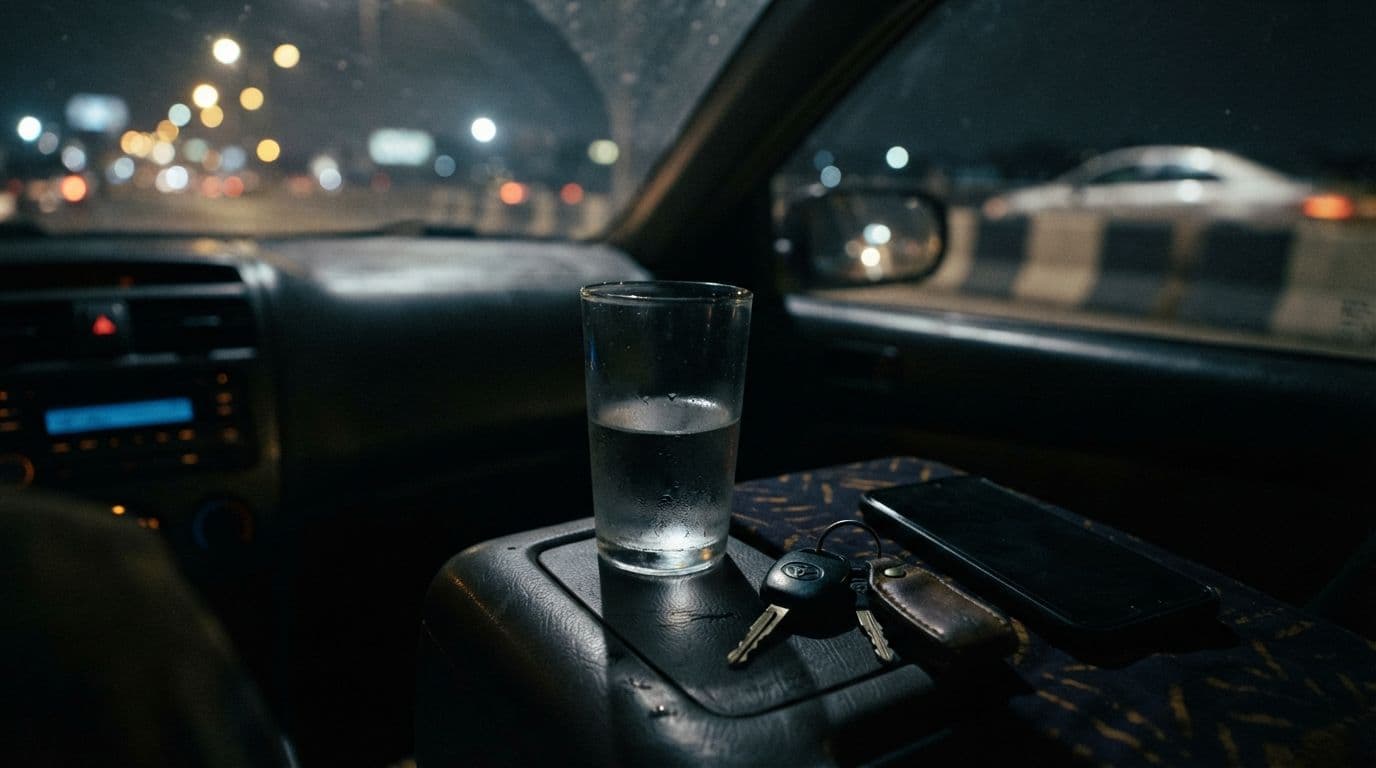
The engine was still humming outside the lounge in Victoria Island when Segun checked the digital clock on his dashboard. It was 2:14 AM. In the passenger seat, Femi was slumped sideways, his neck resting at an unnatural angle against the seatbelt strap. Behind them, two mutual friends were shouting over a phone speaker, debating whether a roadside suya spot in Lekki Phase 1 was worth an extra twenty minutes.
Segun’s right hand stayed firmly wrapped around the steering wheel. He had spent four hours sipping tonic water with lime, smiling through conversations while tracking every bottle ordered at the table. He was the designated driver in Lagos for the third consecutive weekend. Nobody had officially assigned him the role; it had settled on him gradually because he owned a reliable compact SUV and rarely drank past one beer.
What started as a practical arrangement had hardened into an unspoken expectation. While everyone else used Friday night to decompress, Segun was managing security risks, watching fuel gauges, and calculating how many police checkpoints stood between their current location and home.
The Unspoken Tax of the Mainland-Island Commute
Nightlife across Lagos carries logistical friction that rarely exists in cities with predictable public transit. A group living in Ikeja or Surulere heading to a bar in Victoria Island or an afterparty in Oniru faces a serious transit calculation. Ride-hailing fares surge aggressively after midnight, drivers frequently cancel trips heading across the Third Mainland Bridge, and waiting by the curb on a dimly lit street carries distinct safety risks.
Having one friend bring a car solves every problem for the group. It lowers the collective transportation cost, provides a secure place to drop bags, and guarantees a ride home. Yet the relief enjoyed by the passengers is directly transferred to the person behind the wheel. The car owner does not get to disconnect. Instead, they shoulder the mental load of the journey.
Research on group dynamics highlighted in studies on shared adult activities shows that communal gatherings thrive when members participate on equal terms. When one participant consistently acts as a service provider while others unwind, the social contract bends. The outing stops being a collective leisure experience and becomes an uncompensated shift.
In Segun's case, the inequality was obvious. His friends split the lounge bill evenly, factoring in cocktails, grilled fish, and service charges. Nobody offered to contribute to the fuel he burned sitting in Friday traffic on Ozumba Mbadiwe, nor did anyone consider that his night consisted entirely of vigilance.
The Vigilance Gap in Late-Night Lagos
Driving across Lagos between midnight and dawn requires total concentration. Potholes on expressways are difficult to spot, street lighting is inconsistent, and military or police checkpoints require immediate composure. A driver must be alert enough to navigate aggressive commercial buses and calm enough to handle tense security stops.
When three passengers in the car are completely intoxicated, that composure rests entirely on one person. At 2:40 AM near the tollgate, flashing blue lights signalled Segun to slow down. An officer stepped forward with a torch, leaning toward the driver’s window. While Segun produced his documents calmly, an intoxicated voice from the back seat began an unnecessary argument about police harassment.
Segun had to de-escalate the situation, quiet his friend, and present his vehicle particulars without aggravating the officer. It took seven tense minutes to resolve the stop. By the time he was waved through, his shirt was damp with sweat. When he looked in the rear-view mirror, the friend who had caused the commotion was already fast asleep.
This gap in awareness is where resentment quietly builds. The passengers experience the night as a seamless blur of music, food, and effortless movement. The driver experiences it as a high-stakes obstacle course. Understanding these hidden costs is similar to recognizing why your Lagos date budget needs a ride home—mobility in this city always demands a specific physical and psychological price.
Why Rotating the Responsibility Rarely Happens
In ideal circumstances, friends rotate driving duty. One person drives this week, another takes the wheel next week, and everyone gets an opportunity to enjoy the night without responsibility. In practice, this system breaks down quickly within many Lagos friendship circles.
First, not every friend in the circle owns a car. Second, among those who do, differences in vehicle reliability create hesitation. A group will naturally prefer a modern crossover with strong air conditioning over an older sedan prone to overheating in midnight traffic. Third, social habits often dictate who is expected to stay alert.
If one person is naturally disciplined or doesn't drink heavily, the group quickly categorizes them as the default driver. This dynamic mirrors the domestic pressure where the friend who always organises ends up carrying the entire administrative weight of a social circle simply because they are competent. Competence becomes a trap.
When Segun tried to raise the issue in their WhatsApp group the following Tuesday, the response was polite but dismissive.
"Bro, you know your car is the only one that can fit all of us without squeezing," Femi replied.
"Besides, you don't even like drinking like that," another friend added, sending a laughing emoji.
The assumption was clear: because Segun did not consume alcohol heavily, the effort of driving across the city at 3:00 AM cost him nothing. His time, his focus, and his exhaustion were treated as free resources.
The Shift From Connection to Resentment
When leisure becomes work, the desire to show up evaporates. Relationship frameworks outlined by The Gottman Institute emphasize that consistent shared rituals maintain closeness only when both parties feel valued and emotionally safe. When social interactions leave one person feeling used or drained, the ritual ceases to build connection.
Segun found himself making excuses to avoid weekend plans. When the group suggested dinner in Lekki or an event in Victoria Island, he felt an immediate knot in his stomach. He wasn't dreading the venue; he was dreading the journey back. He was tired of having to wake sleeping adults to get gate passes in their estates, tired of cleaning biscuit wrappers and spilled drinks from his footwells, and tired of arriving home at 4:30 AM with a throbbing headache.
Instead of being an opportunity to reconnect after a hard work week, Friday nights had become a secondary job. The friendship felt transactional, even though nobody had consciously decided to exploit him.
The Hidden Logistics of the Drop-Off Circuit
The night does not conclude when the venue closes its doors; for the driver, the most grueling phase is just beginning. Navigating the drop-off route across sprawling residential corridors turns a single journey into an extended tour. Dropping one passenger in Yaba, another in Gbagada, and a third in Magodo means navigating multiple security gates, waiting for estate guards to confirm resident details, and repeatedly reversing out of poorly lit cul-de-sacs.
Each stop introduces friction. A passenger might realize they left their house key inside a shoulder bag buried in the boot, or an estate barrier might be locked down after 1:00 AM, requiring five minutes of horn honking and phone calls to sleeping relatives. While passengers step out into their compounds and head straight to bed, the driver must navigate back to the main expressway alone, fighting off fatigue while remaining alert for sudden lane closures or poorly marked speed bumps.
This administrative tail-end of the night is entirely invisible to those who get dropped off first. By the time the driver finally parks in their own compound, turns off the ignition, and locks the gate, another hour and a half has passed. That silent, solitary leg of the journey transforms what should have been a restorative weekend into an exhausting logistical exercise.
The Financial Blind Spot in Group Calculations
Split-bill culture in casual outings frequently overlooks vehicle wear and operational costs. While friends readily divide the lounge invoice down to the service charge, the tangible expenses of using a private car remain unaccounted for. Premium motor spirit burned idling in gridlock along the commercial strips of the Island is only the most immediate cost. Constant city driving across uneven surfaces accelerates suspension wear, tire degradation, and routine servicing cycles.
There is also the matter of morning remediation. A night out often leaves behind sticky cup holders, crushed fast-food wrappers under the floor mats, and the faint smell of spilled alcohol or street food. Addressing this requires a trip to the car wash on Saturday morning, spending money and weekend hours simply restoring the vehicle to a clean state for the coming work week.
When these secondary costs are absorbed by only one member of the group, it creates an unacknowledged subsidy. A simple conversation about establishing shared transit funds or actively covering car washes can prevent resentment from settling in, much like learning to adjust domestic expectations when friends become roommates: navigating domestic boundaries after moving in together in Lagos.
Reframing the Shared Responsibility Before Leaving Home
Resetting these expectations requires proactive agreements before keys leave the pocket. Relying on spontaneous decisions at 2:00 AM almost always defaults the burden onto the most cautious individual. Friendship circles preserve goodwill when they treat transportation as an explicit group choice rather than an unspoken background service.
Some groups solve this by designating a central, secure drop-off point where everyone disperses individually, ensuring the driver is not forced into residential detours. Others establish a strict policy where the group travels together via hired mobility services whenever the primary goal of the night is unfettered celebration. Choosing collective transit forces everyone to share the financial reality of the commute equally.
Recognizing that mobility in a demanding metropolis comes with physical and mental tolls helps preserve the core connection between friends. Leisure should not depend on one person volunteering their peace of mind so others can fully relax. When every person takes ownership of their arrival and departure, gatherings remain a genuine source of shared joy rather than an unpaid obligation.
Redrawing the Boundaries of the Night Out
Breaking this cycle requires disrupting the default arrangements that groups fall into over time. For Segun, the shift began with a direct, practical boundary.
The following Friday, when plans were being finalized for a gathering on the Island, Segun sent a short note to the chat: “I’m coming, but I’m leaving my car on the Mainland. Let’s split two ride-hailing cabs from the central meeting point, or everyone books their own ride back.”
The initial reaction was mild confusion. One friend pointed out that taking cabs would cost significantly more than sharing fuel. Segun held his position. The extra financial cost was real, but it was the actual price of a night out when nobody wanted to drive.
Removing the private vehicle changed the entire dynamic of the evening. Because everyone had to manage their own transportation, the responsibility for staying safe and coordinating departures returned to each individual. The outing ended earlier, people monitored their own intake more carefully, and Segun was able to leave when he felt tired without negotiating with three passengers who wanted to stay until dawn.
Adult friendships in demanding environments require honest maintenance. When safety, transit, and late-night logistics are involved, assuming that one person will quietly carry the load is a reliable way to wear out goodwill. Real leisure happens only when everyone at the table has the freedom to truly clock out.
Keep reading
Read next.

A Face-Down Phone on Friday Night Explodes Into a Relationship Trial
When one partner craves weekend silence and the other thrives in crowded parlours, an unanswered notification easily turns into an unfair dispute over commitment.
Read the story
Why That Zero-Privacy Parlour Hangout Is Straining Your Shared Flat
In a shared Lagos flat where thin walls kill personal space, a daily parlour hangout quickly became an unwritten law. Here is how flatmates drew the line between routine and obligation.
Read the story
Why That Unread Lagos Message Stalled Your New Friendship
When you relocate to Lagos, an unopened text isn't just bad timing. It becomes a quiet test of whether a budding friendship will survive the city's friction.
Read the story