
Stop Waiting for a Milestone to Gather Your Friends
When one person always plans the hangout, friendship can feel like a production line. Here is what happened when we dropped the reservations and chose a low-stakes afternoon.
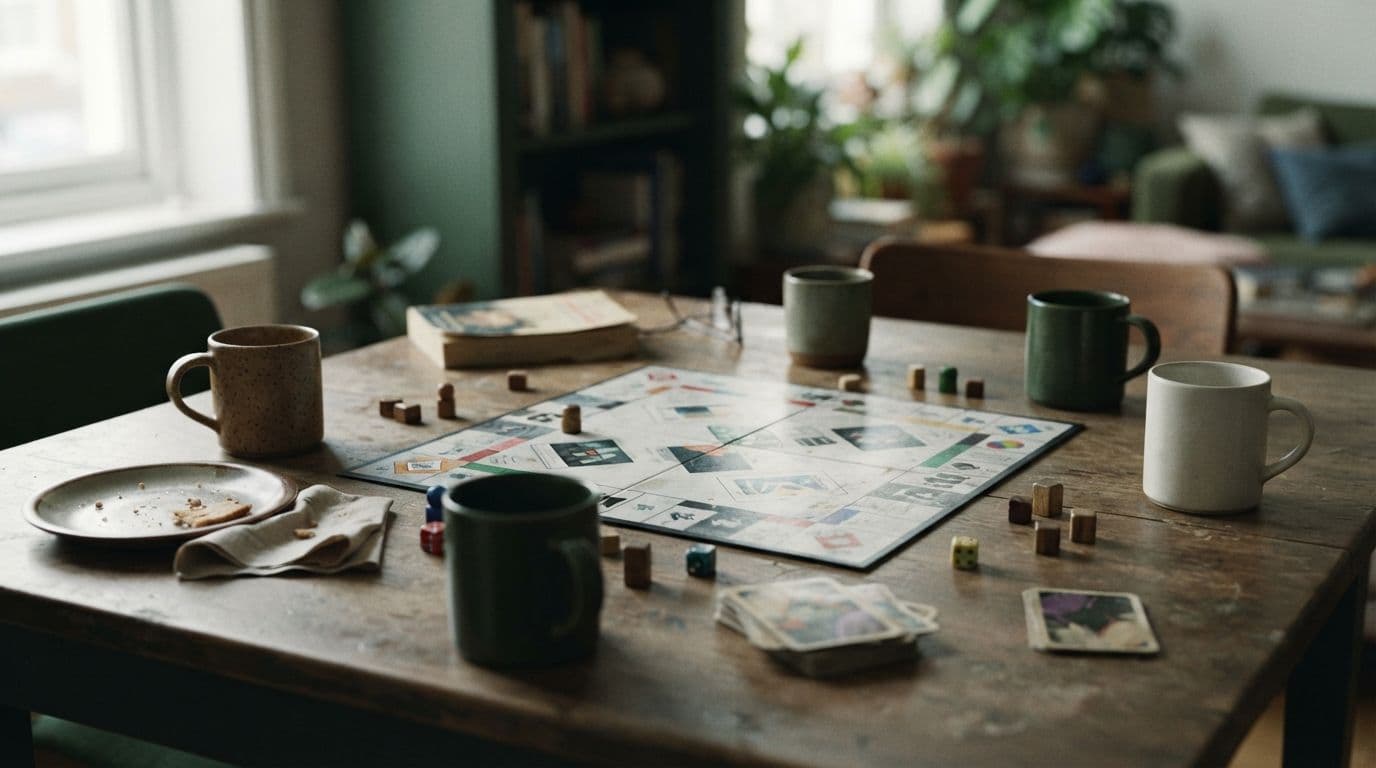
The group chat had been frozen since Tuesday. Fola had dropped three restaurant menus from Victoria Island, complete with minimum spend requirements and valets nobody asked for, followed by a poll about Saturday availability. By Friday afternoon, only two people had voted. Both picked different options.
Fola threw her phone onto the rug in her Surulere living room. For three years, she had served as the unofficial social engine of four former university coursemates. If birthdays came up, she booked the table. When someone landed a promotion, she coordinated the cake. If a month went past without a meetup, she felt an itch that quickly turned into logistical resentment.
"Why am I running an event management company for people who have my phone number?" she muttered to her partner, Tunde, who was slicing plantains in the kitchen.
"Because if you don't book a table, you think everyone has forgotten each other," Tunde said without turning around. "Tell them to come here. Buy chin-chin, boil water for tea or open beer, bring out the Scrabble board, and stop creating a red-carpet production."
Fola hesitated. Adult gatherings in Nigerian cities often feel like miniature weddings: coordinated outfits, reserved booths, photography angles, and a mental tally of split bills. Yet being the friend who always organises every hangout had drained her enthusiasm. She picked up her phone, deleted the restaurant poll, and sent a single text: Tomorrow, 2:00 pm. My balcony. Come with whatever you are drinking. No dress code, no table reservations.
The Unspoken Tax on the Group Planner
When a circle matures into full adulthood, gathering becomes heavier. Work commutes stretch longer, rent demands recalculate priorities, and discretionary spending shrinks. Yet social expectations frequently run in the opposite direction. Hangouts default to upscale rooftops where water costs a thousand naira and conversations compete with loud speakers.
In many circles, one person quietly absorbs the administrative friction. They calculate arrival times, chase bank transfers, and mediate between the friend who only eats at certain venues and the friend watching their fuel budget. Over time, this dynamic creates two distinct problems. The organiser begins to measure mutual affection by attendance numbers, while everyone else becomes passive consumers of someone else's initiative.
Our earlier reflection on the friend who always organises routine vs obligation highlights how easily habitual hospitality turns into silent resentment. When one person carries the momentum, genuine connection is replaced by performance logistics.
Yet research into social networks suggests that deep companionship rarely depends on elaborate settings. As explored in studies on how adults embrace play to build community, activity-based gatherings lower social friction because people show up simply to engage, not to put on an appearance. When the overhead drops, the pressure to justify the gathering disappears.
The Awkward First Twenty Minutes
By 2:30 pm on Saturday, Jimi arrived in faded track pants, carrying a half-empty bottle of gin and a pack of cream crackers. Bukky showed up twenty minutes later, visibly flustered because she had spent ten minutes looking for a parking spot on the street rather than paying a gate security fee.
"Where is the rest of the plan?" Bukky asked, looking around the modest living room. There was no charcuterie board, no curated playlist playing through a soundbar, and no itinerary.
"This is the plan," Fola said, pointing toward the dining table where a battered box of Ludo and an incomplete deck of cards lay.
"Wait, we are not going anywhere after?" Jimi asked, pulling out a chair. "I thought this was the pre-game."
"No pre-game," Fola replied firmly. "If we sit here until 6:00 pm arguing about who cheated at Whist, that is the entire Saturday."
For the first quarter of an hour, the room held a strange stiffness. Without menus to examine, lighting to test for phone cameras, or waiters to flag down, they had to confront the basic reality of each other's company. Adult life trains people to expect an agenda. Strip away the agenda, and you momentarily expose the raw mechanics of conversation.
Bukky checked her phone twice before putting it face down. Jimi shuffled the cards with exaggerated focus. Then, during the second round of Ludo, Jimi attempted to cut Bukky’s piece while claiming a house rule nobody else recognised.
Within five minutes, the room was shouting. It was loud, chaotic, and entirely unpolished—the exact energy their university common room used to hold before everyone acquired titles, car loans, and performative weekend habits.
Why Play Beats Polished Dining
High-cost adult outings often encourage a defensive posture. People show up tired from a long workweek, order within their budget limits, and maintain a polite conversational rhythm about career milestones, exchange rates, and family obligations. It resembles a status report more than a reunion.
By contrast, informal play strips away professional armour. A game of cards or casual banter forces immediate focus on the present moment. You cannot easily draft a work email while defending your last piece on a board.
Long-term relationship research documented in Gottman's rituals of connection underscores that small, predictable, low-pressure rituals sustain bonds far better than occasional grand gestures. Shared amusement creates a shared vocabulary that outlasts any expensive dinner.
This principle applies across all forms of adult connection. In our guide on why a quiet person should not have to host, we examined how emotional overhead can ruin domestic spaces when gatherings are treated like public showcases. When hospitality becomes casual, hosting stops being a test of status.
The Cost of Waiting for Big Occasions
A common failure mode in modern friendships is the reliance on milestone triggers. We promise to catch up during December festivities, when someone marries, or when someone relocates abroad. Between those major milestones, months slip by with nothing more than heart emojis on social media stories.
When you only gather for major events, your friendships become transactional. You only see each other when there is an announcement to celebrate or a tragedy to comfort. The ordinary middle—the mundane updates, the mild work frustrations, the pointless debates about music—gets lost.
Sitting on Fola's balcony around 5:00 pm, eating roasted groundnuts and drinking cold water, the conversation shifted naturally. Bukky spoke openly about wanting to change jobs without having to present it as an impressive victory. Jimi admitted he was struggling to adapt to his new flat in Ikeja. Without the ambient noise of a restaurant, they listened without checking the bill or watching the time.
No one took a group photograph until Jimi was walking out the door, and even then, it was blurry and taken against a plain corridor wall. It would never make an aesthetic social media carousel, which made it far more valuable.
The Trap of Accidental Consumption
When one friend naturally manages the calendar, the rest of the group quickly slides into consumer mode. It rarely happens out of malice. Instead, life gets busy, and having someone else pick the venue, verify parking, and chase RSVPs feels like a relief. Over time, however, this pattern changes the tone of adult friendship. The organiser feels like an anxious party promoter trying to hit attendance targets, while the attendees behave like paying clients evaluating an experience.
Jimi had noticed this creeping into his own habits over the past two years. When Fola sent a venue link, he would glance at the pricing, check his fuel gauge, and decide whether the outing felt "worth it." He had stopped thinking of gathering as a mutual responsibility. It was simply an event taking place on a Saturday afternoon, organised by Fola, which he could accept or decline based on convenience.
Sitting in Fola's parlour, watching her argue passionately over a disputed Ludo move rather than managing a waiter or splitting a bill, Jimi realised how much emotional friction they had introduced into basic company. In our exploration of setting money boundaries without losing friends, we examined how financial posturing often disguises simple social anxiety. When there is no bill to settle, people stop calculating whether their presence is cost-effective.
Stripping away the commercial setting exposes who actually wants to spend time together. Without an expensive backdrop or curated food, there is nothing left to consume except the conversation itself.
Moving from Performance to Presence
Many adults in fast-paced cities find unstructured time deeply unsettling. We spend forty to sixty hours a week executing deliverables, meeting performance indicators, and presenting polished versions of our lives to clients, bosses, and landlords. By Saturday, that operational momentum is hard to turn off. Heading to an upscale lounge allows people to maintain that executive persona while calling it leisure.
Bukky had initially struggled with the lack of structure on Fola's balcony. Her instinct was to ask what came next, who else was joining, and how long they planned to stay. Her daily life in human resources was defined by tight schedules and clear outcomes. Sitting on a plastic chair with a paper napkin of groundnuts in her lap felt almost disorienting because there was no metric of success for the afternoon.
Yet as the afternoon stretched past 4:00 pm, the absence of an agenda created room for genuine candour. Research discussed in studies on how adults embrace play to build community shows that shared low-stakes activities provide an easy bridge across daily fatigue. You do not need to arrive with an impressive conversational update when you are simply rolling dice or holding cards.
Instead of reciting rehearsed career updates, Bukky found herself complaining about the erratic water pump in her compound and laughing about a disastrous driving lesson. The pressure to appear thriving vanished the moment the setting stopped demanding an entrance fee.
Creating Sustainable Friendship Infrastructure
A group cannot survive on the stamina of a single social driver. When one person carries the logistical load, burnout is inevitable, and the friendships usually fade the moment that person decides to stop texting first. To make adult connections durable, the friction required to meet must be lower than the friction required to stay home.
Sustainable social habits do not require elaborate hosting rotations. They require agreeing that basic hospitality is sufficient. A standing agreement to gather over tap water, simple snacks, and card games means nobody has to clean their house for three hours or cook a four-course meal just to see their friends. It transforms hosting from an exhausting showcase into an ordinary domestic rhythm.
This practical shift protects both the host and the guests from quiet resentment. It allows people with varying incomes, tight work schedules, or limited energy to show up as they are. When the threshold for spending time together is practically zero, staying in touch stops feeling like another item on a crowded to-do list.
Shifting the Responsibility
Before everyone left, Bukky paused by the shoe rack. "Next month is at my place. But do not expect any cooking. We will buy street food on the corner and play scrabble."
Fola smiled, feeling a distinct weight lift from her shoulders. The relief did not come from having a brilliant afternoon; it came from realizing she did not have to manufacture magic to keep her friends.
If you find yourself constantly planning, coordinating, and carrying the social calendar of your group, consider lowering the bar entirely. Stop booking the VIP lounges. Stop asking for confirmations three weeks in advance. Invite two people over, bring out a deck of cards, serve whatever is in the fridge, and let adult friendship be simple again.