
The 8 PM Guest Who Refuses to Leave Your Parlour
A casual evening visit shouldn't hijack your weekend. When a close friend turns every drop-in into an uninvited sleepover, quiet hosts must learn to close the door.
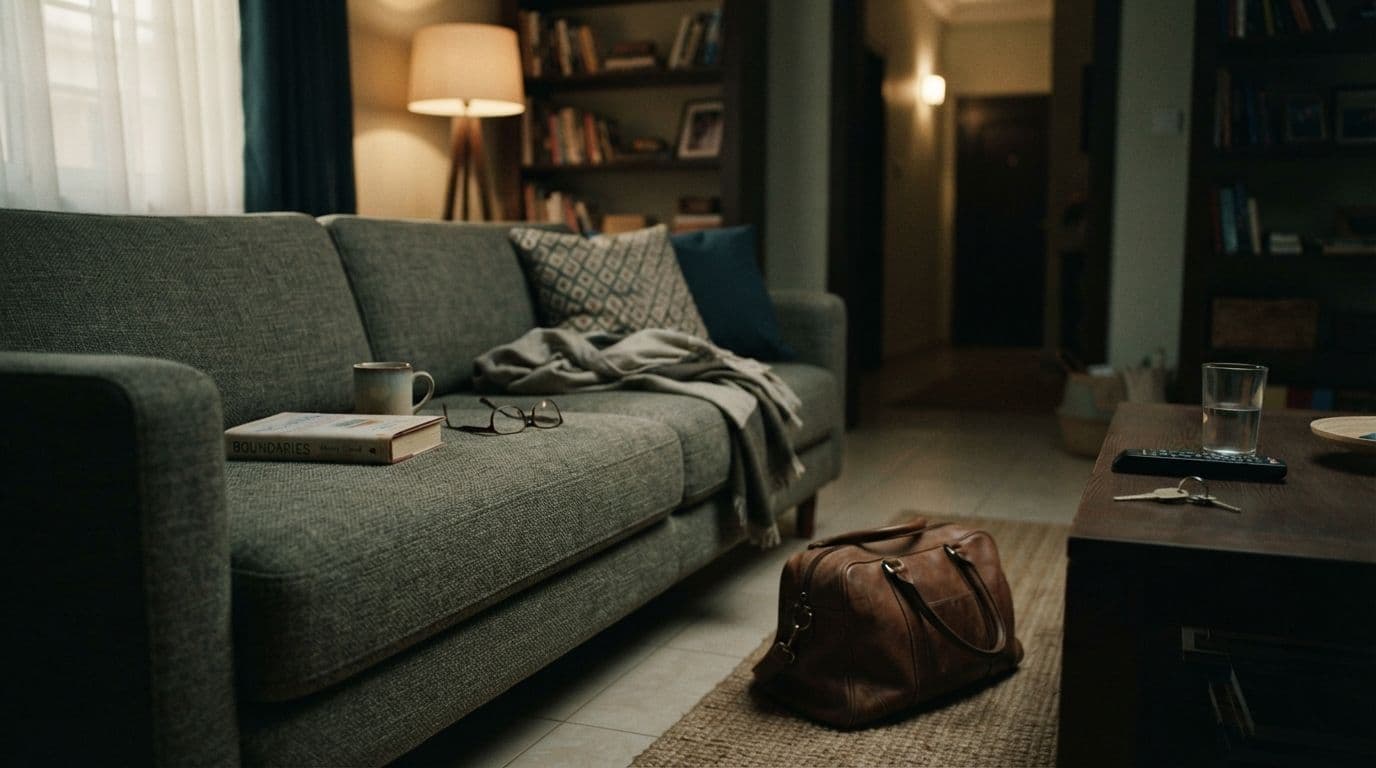
The wall clock in Fola’s Ikeja living room showed 9:42 PM on a Saturday, and Osas was taking off his wristwatch. He placed it deliberately beside the television remote, kicked off his loafers, and asked for the spare phone charger.
Fola froze with an empty water glass in his hand. He had invited Osas over at six to watch a football match and share a bowl of pepper soup. The match had ended two hours ago. The analysis was over. Yet Osas was stretching out across the three-seater sofa, settling in as if the night had only just begun.
“Guy, that Third Mainland traffic around this time is always nonsense,” Osas remarked, scrolling through his phone. “Let me just crash on your couch till early tomorrow morning. I’ll leave after Sunday morning church.”
Fola felt an all-too-familiar tightness in his chest. Osas had not brought a change of clothes, but he didn't need one; he simply assumed the parlour was an open annex to his own apartment. To Osas, crashing on a friend’s sofa was the ultimate mark of brotherhood. To Fola, who worked sixty-hour weeks in corporate logistics and guarded his weekend silence with fierce devotion, an uninvited sleepover felt like a domestic invasion.
The Creeping Expansion of the Casual Drop-In
Among close circles, hospitality often carries an unspoken expectation of limitless elasticity. You welcome someone in for a quick drink, and before the conversation finishes, they have assimilated into your household schedule. When you live alone or keep a tidy, predictable domestic routine, friends frequently view your flat as a low-friction transit hub.
This pattern rarely starts with an explicit request to stay over for the weekend. Instead, it begins with small, incremental delays. A guest waits until ride-hailing fares surge, mentions how dark the access road has become, or asks what you plan to make for breakfast the following morning. By framing the decision as simple convenience or safety, they quietly shift the burden of hospitality onto the host.
If you speak up and mention that you had plans to read, rest, or simply be alone, you risk being labelled rigid, inhospitable, or distant. Many quiet adults succumb to the pressure simply to avoid the social awkwardness of handing a friend their shoes at the door.
Over time, accommodating an unannounced guest stops being a spontaneous act of warmth and turns into a recurring chore. When your private living space ceases to offer guaranteed solitude, your home stops functioning as a sanctuary.
Why Communal Assumptions Clash With Quiet Living
In many social circles, the ability to drop in and stay late is treated as the truest metric of intimacy. Close friends are supposed to waive formalities. If you ask for personal notice, you are treated as though you are placing unnecessary barriers between lifelong companions.
Sociological work on social cohesion shows that shared activity creates deep communal bonds. Research published by the Greater Good Science Center highlights how regular, low-stakes activities help adults build enduring community. But genuine community relies on mutual consent rather than quiet endurance. Imposing an extended stay under the banner of camaraderie often undermines the very affection it seeks to express.
Osas viewed Fola’s quiet flat as an effortless haven. In his eyes, staying over was an honour paid to their friendship. He did not consider that Fola required hours of total silence on Sunday mornings to reset his mind for the week ahead.
When a guest presumes they can convert a two-hour visit into an uninvited sleepover, they are treating another adult's private sanctuary as communal property. Similar tensions emerge when professional obligations bleed into living spaces, much like how free inverter power turns your living room into a shared desk without prior agreement. Boundaries do not signify a lack of love; they preserve the conditions that allow friendship to thrive without hidden resentment.
The Emotional Tax on the Introverted Host
Hosting is an active state of performance. Even when a guest insists they are low-maintenance, a considerate host cannot fully disengage. You cannot walk around in your underwear, turn off the lights at nine, or leave dishes in the sink without feeling an underlying social responsibility.
When an overnight stay is sprung upon an introverted host, the mental toll is immediate:
- Extended social vigilance: You remain partially 'on' throughout the night, aware of someone else moving in your space. * Disrupted personal routines: Morning reading, quiet coffee, or exercise are sacrificed to accommodate small talk. * Resentment toward the guest: What should have been a pleasant catch-up ends with quiet frustration. * Reluctance to invite friends in the future: You stop opening your home altogether out of fear that guests will refuse to leave.
Healthy partnerships and adult friendships require reliable habits that safeguard personal well-being. Studies on relational dynamics from the Gottman Institute emphasize the necessity of intentional daily rituals to maintain connection without burning out. When unexpected demands repeatedly disrupt a person’s private space, it erodes the safety required for healthy, ongoing engagement.
Protecting your parlour from becoming an improvised guesthouse is not an insult to your visitors. It is a necessary measure to prevent casual companionship from becoming an exhausting domestic performance.
Reframing the Exit: Practical Ways to Close the Door
Preventing an unplanned sleepover does not require an emotional confrontation. It requires setting clear operational boundaries early in the evening, long before your guest reaches for the spare charger.
1. Define the Exit Time at the Outset
2. Offer Practical Exit Logistics
3. Avoid Open-Ended Domestic Comforts
Just as we have examined how your shared parlour is not an after-hours reception lounge, private apartments should not be treated as default overnight holding cells. An honest refusal at 9 PM is far healthier for a relationship than twelve hours of concealed irritation.
The Logistics Dilemma: When Lagos Movement Becomes an Excuse
In a city defined by logistical friction, transport realities often double as social leverage. An evening hangout rarely exists in a vacuum; it competes with gridlock on Ikorodu Road, unpredictable rainstorms, and the sudden spike in ride-hailing fares. For an outgoing guest, these everyday hurdles provide a natural justification to extend an evening indefinitely. Deciding to crash on a friend's couch is framed not as an imposition, but as a sensible tactical retreat from the road.
Yet this convenience for the guest shifts an immediate operational cost onto the host. Beyond the loss of privacy, an overnight stay consumes household resources that quiet hosts manage with care. Running an inverter or generator overnight to keep a guest comfortable under the ceiling fan alters fuel budgets. Providing extra water, morning tea, or an unplanned breakfast disrupts meal planning. When someone assumes they can simply stay until daybreak, they overlook the quiet effort required to sustain domestic comfort in an unpredictable environment.
Recognising these subtle pressures is essential for anyone who feels trapped by late-evening visits. It is entirely reasonable to acknowledge a friend’s transport worries while maintaining the perimeter of your own home. Offering to walk them to the gate before ten, checking traffic updates together at eight, or insisting on calling a ride before late-night surge pricing kicks in are ways to show care without forfeiting your evening peace. Exploring why a quiet person should not have to host clarifies why personal limits are vital when shared logistics turn difficult.
The Extrovert’s Blind Spot and the Value of Third Places
Not every lingering guest acts out of entitlement or disregard. In many instances, the habit stems from a genuine difference in how people recharge. To an extroverted friend who thrives on ambient noise and constant chatter, staying over is the natural climax of a great evening. Leaving at nine feels abrupt, almost transactional, as if putting a premature full stop on an open conversation. They assume that because they feel completely at ease in your space, you must feel equally relaxed having them there.
This fundamental gap in perspective can be bridged by shifting gatherings out of private parlours and into shared public spaces. When friends meet at neighbourhood spots, quiet cafes, or open-air viewing centres, the physical environment provides natural bookends. The closing of a kitchen, the clearing of tables, or the final whistle of a public broadcast creates an external cue that the hangout has finished. Neither person has to perform the awkward dance of managing domestic departures.
Moving regular meetups outside the home allows people with different social appetites to enjoy each other without resentment. The extroverted companion gets their fill of shared laughter and conversation, while the reserved host retains absolute control over when they return to their private sanctuary. When private living rooms are spared from constant social duty, the friendship itself remains untainted by the exhaustion of unplanned hospitality.
Resetting the Pattern After Months of Polite Acquiescence
Breaking an established precedent is often the hardest part for an accommodating host. When you have spent months letting a friend sleep over without vocal complaint, drawing a sudden boundary can feel jarring. You worry that putting your foot down will be interpreted as personal malice or a sudden withdrawal of affection. As a result, many quiet adults continue enduring uncomfortable weekends long past their breaking point.
Changing this dynamic does not require dramatic confrontations or fabricated emergencies. It begins with clear, advance communication before the next visit even starts. Stating your schedule ahead of time removes the element of surprise: "I'd love to catch the match together on Friday, but I have errands early Saturday, so we’ll need to wrap up by nine." By framing the boundary as a routine domestic necessity rather than an emotional reaction, you make the rule about your time, not their presence.
If a companion still attempts to push past the agreed cutoff, a consistent, calm repetition of the boundary is usually enough to settle the matter. True friendship easily survives clear personal parameters; it is silent resentment that quietly erodes closeness over time. Reclaiming the autonomy of your home ensures that when you do choose to open your doors, you welcome visitors with genuine enthusiasm instead of concealed dread.
Protecting the Sanctuary
Back in Ikeja, Fola placed his glass on the table and did not fetch the charger. He looked at Osas directly, kept his voice calm, and spoke without apology.
“Osas, I have to prep for a major presentation tomorrow morning and I need the flat completely quiet. Let’s order your ride before the surge goes higher.”
Osas blinked, surprised by the directness. For a moment, the room was silent. Then Osas picked his wristwatch off the table, slipped it back onto his wrist, and nodded.
“No wahala, my guy. Let me check the app now.”
Fifteen minutes later, the front door closed, the deadbolt clicked into place, and the parlour returned to total stillness. Fola turned off the overhead lights, sat back down on his sofa, and finally breathed in the quiet evening he had worked all week to enjoy.
Keep reading
Read next.

A Missed Voice Note After Relocation Turned Our Quiet Gap Into an Open Trial
When Folarin relocated to Abuja, an unlistened voice note turned an ordinary delay into a bitter argument about social rank, busy lives, and the fragility of distance.
Read the story
A Foreign-Earned Salary Turned Our Casual Table Into a Test
When one friend secures a foreign-currency contract, weekend meetups quickly shift from relaxed catch-ups into high-stakes negotiations over venue costs.
Read the story
Split Checks and Silent Grudges: Fixing the Costly Weekend Routine
When differing career jumps inflate the price of catching up, polite silence around rising bills tests long-standing friendships far more than honest money boundaries ever could.
Read the story